
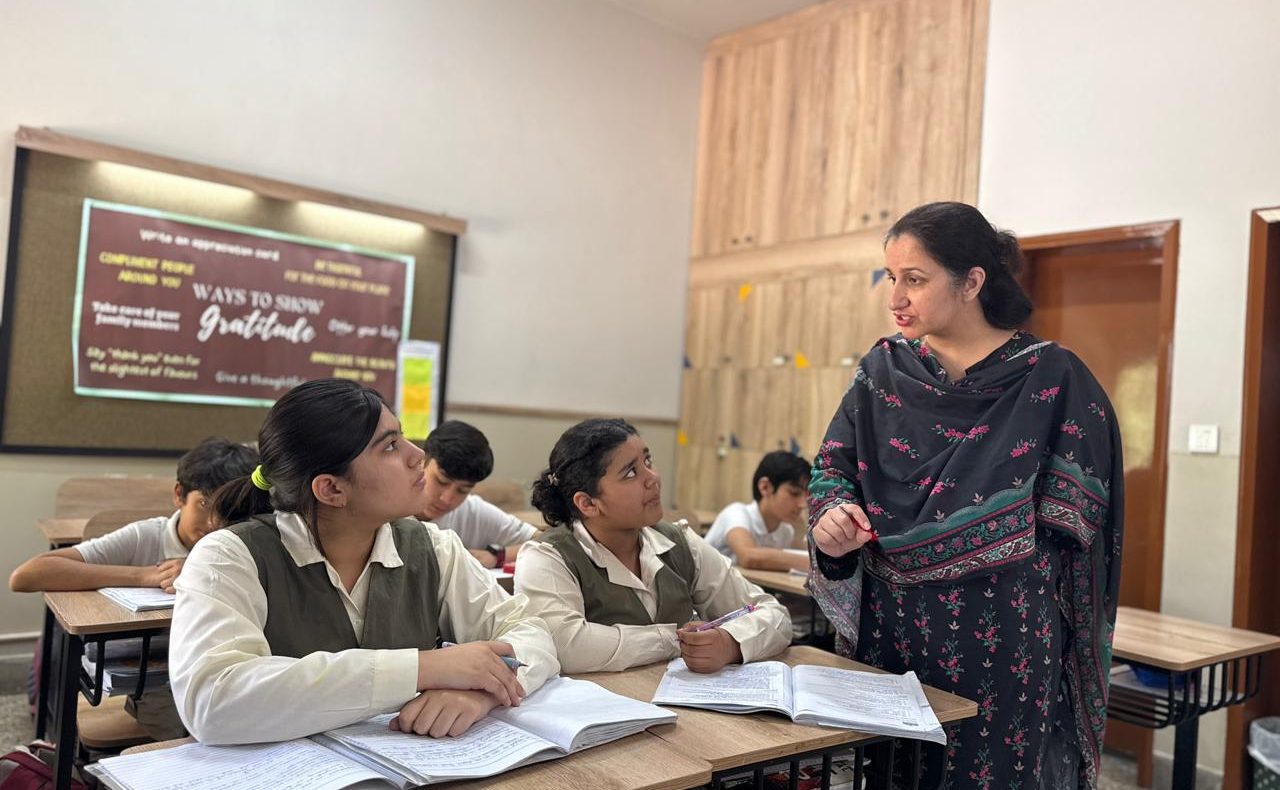
The Reality of Attention in Today’s World
There is something many parents notice today, often without being able to fully explain it. Children seem more distracted than before. Their attention shifts quickly, their engagement fluctuates, and even tasks that once felt simple now require repeated reminders and effort.
It is easy to assume that children are losing their ability to focus. But when we pause and look more closely, the reality is more complex. The world around them has changed. It is faster, louder, and filled with constant stimulation. Notifications, screens, rapid content, and continuous input have reshaped how attention works. In such an environment, expecting a child to naturally sustain deep focus without guidance is no longer realistic.
At Schola Nova, we do not see distraction as a problem to be corrected. We see it as a skill that needs to be developed.
Understanding What Focus Really Means
When we talk about focus, it is important to move beyond the idea of simply sitting still or appearing attentive. True focus is internal. It is the ability to direct attention intentionally, to stay with a task even when it becomes challenging, and to resist the pull of easier or more immediately rewarding distractions.
This ability is closely linked to executive functioning. Skills such as organisation, working memory, and self regulation all contribute to how well a child can concentrate. These are not skills that develop automatically. They evolve over time and require consistent, intentional support.
This is why we approach focus not as an expectation, but as a process.
Why Focus Feels More Difficult Today
Many children today are used to environments where information is delivered quickly and constantly changes. This trains the brain to seek novelty and immediate reward. When that same child is asked to engage with a task that requires sustained effort, it can feel uncomfortable, even overwhelming.
Instead of responding with pressure, we respond with structure. Instead of expecting immediate change, we build capacity gradually.
Building Focus Gradually Over Time
At Schola Nova, we begin with manageable periods of focus. Tasks are designed to engage without overwhelming. Students are guided gently to stay with their work, even when their instinct is to move away from it.
Over time, these small efforts begin to extend. What once felt difficult starts to feel familiar. This gradual process is essential because focus cannot be forced. When it is pushed too quickly, it often leads to resistance. But when it is built steadily, it becomes a habit.
Reducing Mental Load to Improve Attention
Often, distraction is not simply about lack of interest. It is about the mind being occupied with too many things at once. When a child is trying to remember instructions, organise materials, and manage expectations simultaneously, their attention becomes divided.
Clear routines and structured systems help reduce this load. When a child knows what to expect, they do not need to spend energy figuring it out. That energy can instead be directed towards learning.
Tools such as planners and timetables support this process by helping students organise their tasks and reduce mental clutter.
Helping Students Understand Time and Rhythm
Children do not naturally understand how to pace themselves. Without guidance, they may rush through tasks or lose engagement halfway.
By introducing simple time management strategies, we help them experience a rhythm of working and pausing. Short, focused periods followed by brief breaks allow the brain to engage fully without becoming fatigued.
Over time, students begin to recognise their own patterns. They learn when they are most focused, when they need a break, and how to return to a task with renewed attention.
Creating an Environment That Supports Focus
The physical environment plays a quiet but powerful role in shaping attention. Classrooms that are overly stimulating can make it difficult for students to concentrate, while overly minimal spaces may lack engagement.
We aim for balance. Spaces are organised, purposeful, and calm. Visuals are meaningful rather than excessive. Movement is guided rather than chaotic.
When the environment is clear, the mind follows.
Engagement as the Key to Sustained Attention
Children are naturally attentive when they are involved. Passive learning often leads to drifting attention, while active participation holds it.
This is why students are encouraged to question, discuss, and explore. They engage with ideas rather than simply receiving them.
When a child feels involved, they invest mentally. And when they invest, focus develops naturally.
The Importance of Breaks and Resetting Attention
Continuous work without breaks can lead to mental fatigue, which reduces the quality of attention.
At Schola Nova, structured breaks are part of the learning process. A short walk, a moment of stretching, or a simple change in activity allows the brain to reset.
When students return, they are able to engage with greater clarity and energy.
Developing Awareness Around Technology
Technology is a part of modern learning, but it requires awareness. Instead of restricting it entirely, we guide students to understand how it affects their attention.
They learn when to use it productively and when to step away. This is particularly important in environments such as a Cambridge school in Islamabad, where digital tools are integrated into everyday learning.
The goal is not to remove technology, but to develop control over it.
Focus as a Lifelong Skill
Strong focus is not just useful in school. It shapes how children approach challenges, manage responsibilities, and stay committed to long term goals.
A student who can direct their attention is more likely to persist, and persistence is what leads to meaningful growth.
A Gradual and Meaningful Transformation
What we observe over time is not a sudden change, but a steady shift. A child who once struggled begins to focus for longer periods. A child who was easily distracted begins to return to their task independently.
These small changes reflect deeper development. They show that focus is being built, not forced.
A Final Thought for Parents
If you find yourself concerned about your child’s attention, it may help to see focus as a skill in progress rather than a fixed ability.
At Schola Nova, our aim is not to eliminate distraction completely. Instead, we guide students to understand it, manage it, and gradually strengthen their ability to return their attention where it matters.
Because in a world that constantly pulls attention away, the ability to bring it back is one of the most valuable skills a child can develop.
And sometimes, the most meaningful progress is quiet. It is a child sitting a little longer, trying again, and slowly learning how to stay.