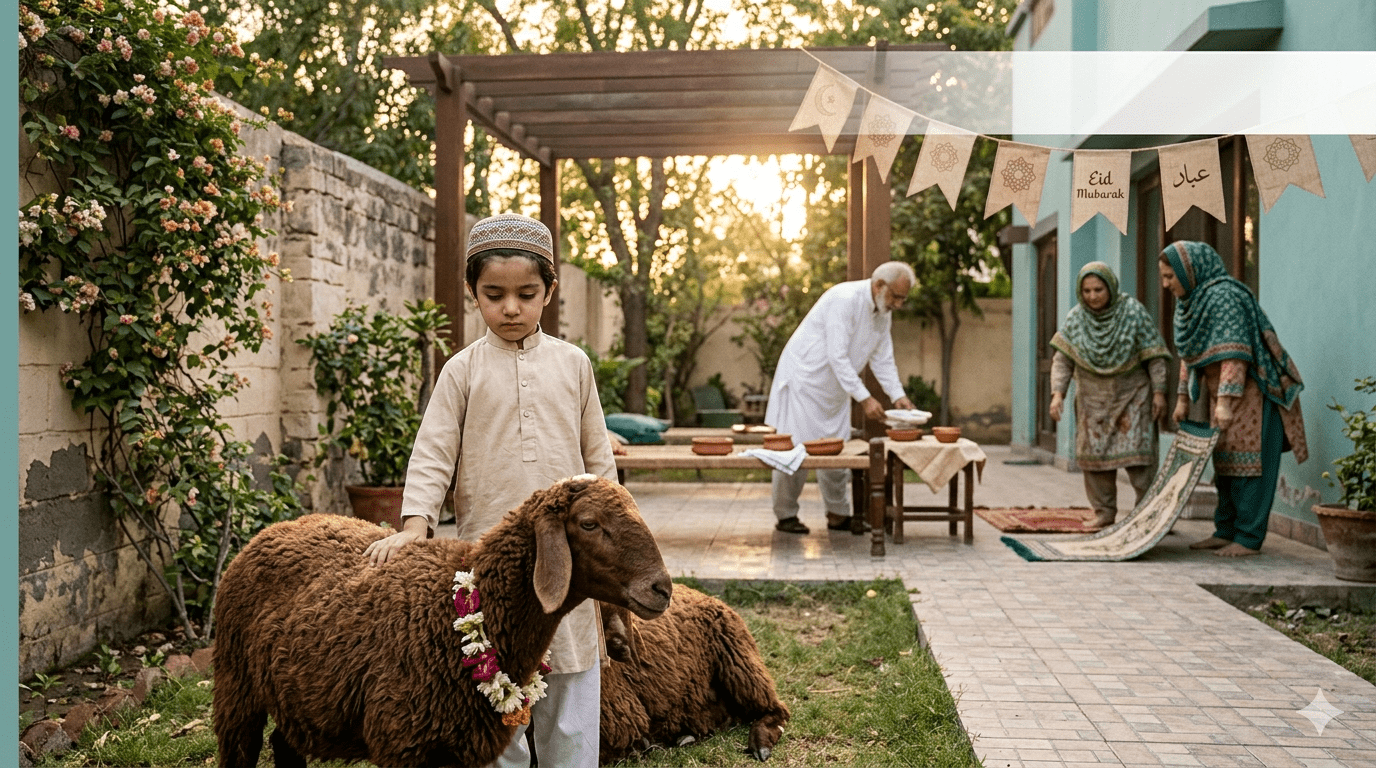
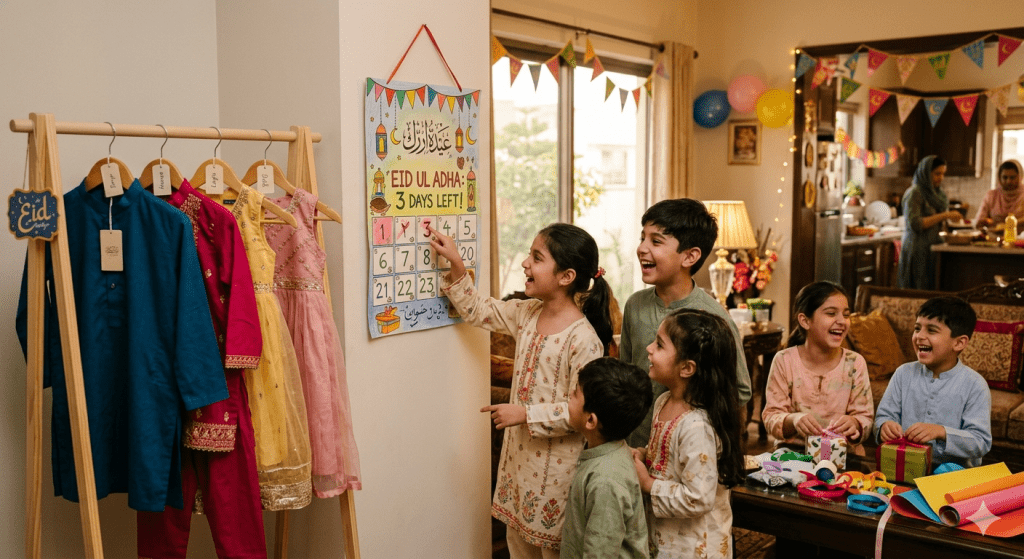
For many children, Eid ul Adha arrives with excitement long before the actual day of celebration. Homes slowly become busier than usual, family conversations begin revolving around preparations, and children eagerly count down the days. New clothes are chosen and carefully kept aside, plans are made for family visits, and thoughts begin wandering toward delicious food, cousins, laughter, and perhaps even Eidi. There is a special kind of happiness that quietly settles into homes during this time, creating memories that children often carry with them for years.
For young minds, Eid ul Adha can sometimes feel like joy wrapped in celebration. And rightly so. Festivals are meant to bring happiness and strengthen relationships. However, hidden beneath the excitement and festivities lies a much deeper story, one that has travelled through generations and continues to carry timeless lessons.
Eid ul Adha is far more than a day of celebration. It is a reminder of faith, compassion, generosity, gratitude, and sacrifice. For students especially, understanding the deeper meaning of Eid ul Adha in Islam offers lessons that extend beyond religious understanding and into everyday life.
At Schola Nova, we believe education goes beyond textbooks and examinations. Learning also involves understanding values that shape character, influence choices, and guide students in becoming thoughtful and compassionate individuals. The importance of Eid ul Adha lies not only in understanding a religious event but also in discovering the life lessons hidden within it.
Today, perhaps these lessons matter more than ever.

Growing Up in a World That Wants Everything Instantly
Children today are growing up in a world very different from previous generations. Food can be delivered within minutes, information appears instantly through a simple search, and entertainment is available with just a click. Technology has brought incredible convenience and opportunities into our lives, making many things easier and more accessible.
However, this fast-paced environment also presents an interesting challenge.
Many children are growing up in a world where waiting feels unusual. Patience sometimes feels difficult, and delayed rewards can feel frustrating. We often live in a culture where quick results are expected and where effort can occasionally seem less important than immediate outcomes.
As parents and educators, many of us quietly wonder:
Are children still learning patience?
Are they learning gratitude?
Are they learning the value of effort and selflessness?
Perhaps this is one reason why celebrations like Eid ul Adha continue to hold such significance. The Festival of Sacrifice gently reminds us that some of life’s most meaningful rewards cannot be gained instantly. Character develops slowly. Kindness grows through repeated actions. Gratitude develops through reflection, and sacrifice teaches us that valuable things often require effort and intention.
What Does Sacrifice Really Mean?
When children hear the word sacrifice, many immediately connect it with Qurbani or think of giving away something important. The word itself can sound large and serious. Yet sacrifice is often present in everyday life, even when we do not recognise it.
Students experience sacrifice more frequently than they realise. A child choosing to complete homework before playing games is making a small sacrifice. A student spending extra time practising for an upcoming competition instead of watching television is making a sacrifice. Sharing favourite snacks with a sibling, helping a friend understand a difficult lesson, or apologising after making a mistake despite feeling uncomfortable are also forms of sacrifice.
Parents make sacrifices daily by placing their children’s needs before their own comfort. Teachers invest extra time and effort to help students grow academically and emotionally.
Suddenly sacrifice no longer feels distant or overwhelming.
Instead, it begins appearing in ordinary moments.
And perhaps that is where its greatest beauty exists.
Because sacrifice is not always about losing something valuable. Sometimes sacrifice is about choosing something greater.
The Story That Continues to Inspire Generations
The story behind Eid ul Adha began thousands of years ago and continues to teach lessons that remain relevant even today.
Prophet Ibrahim (AS) had waited many years for a child. Prophet Ismail (AS) was deeply loved and precious to him. Like any parent, Prophet Ibrahim (AS) carried hopes, dreams, and immense love for his son.
Then came a difficult test.
According to Islamic teachings, Prophet Ibrahim (AS) saw in a dream that Allah commanded him to sacrifice his son.
Imagine the emotions that such a moment may have carried. Imagine the love between a father and son, the difficulty of the situation, and the uncertainty that accompanied it.
Yet despite the challenge, Prophet Ibrahim (AS) showed complete faith and trust in Allah.
What makes this story even more remarkable is that Prophet Ismail (AS) also demonstrated patience and faith. Together, father and son displayed obedience, sincerity, and unwavering trust.
Before the sacrifice could take place, Allah replaced Prophet Ismail (AS) with a ram, rewarding their devotion and faith.
This event forms the foundation of the meaning and importance of Eid ul Adha in Islam.
However, perhaps one of the most beautiful lessons within the story is often overlooked.
The story was never simply about sacrifice.
It was also about trust.
It was about placing faith before fear, values before comfort, and obedience before uncertainty.
The Connection Between Hajj and Eid ul Adha
Many students may not realise that Eid ul Adha is closely connected to Hajj, the annual pilgrimage to Makkah and one of the Five Pillars of Islam.
During the month of Dhul Hijjah, millions of Muslims travel from different parts of the world to perform Hajj. People from various countries, cultures, and backgrounds gather together in one place.
They speak different languages.
They live different lives.
They come from different communities.
Yet something extraordinary happens.
They stand together as equals before Allah.
Their clothing removes visible signs of wealth and status, reminding everyone that humanity matters more than appearance or possessions.
This message feels particularly important for young learners. Schools, like communities, bring together students from different backgrounds, personalities, and experiences. Some students excel in academics, while others shine in sports, arts, leadership, or creativity.
At Schola Nova, we believe every student contributes something meaningful and valuable. Diversity strengthens communities and helps children appreciate differences while learning empathy and respect.
Important Lessons Students Can Learn from Eid ul Adha
The lessons from Eid ul Adha are not limited to religious understanding alone. They become lessons that can guide students throughout everyday life.
Gratitude
Children naturally become excited about new things — a new toy, a gadget, a favourite activity, or something exciting to look forward to. However, Eid ul Adha gently reminds us to appreciate blessings that already exist around us.
Family support, meaningful friendships, good health, education, opportunities, and love are gifts that shape our lives in powerful ways. Because these blessings become part of daily life, they can sometimes be overlooked. Practising gratitude helps children recognise and appreciate these meaningful aspects of life.
Compassion and Generosity
One important practice associated with Eid ul Adha is sharing. Families distribute portions of Qurbani meat among relatives, friends, and people in need. This teaches children that celebrations become more meaningful when happiness extends beyond ourselves.
Students can practise generosity and compassion through simple everyday actions. Helping a classmate understand a difficult concept, sharing with a friend, encouraging someone who feels left out, or expressing appreciation to teachers are small acts that often create meaningful impact.
Responsibility
Responsibility is another important lesson hidden within Eid ul Adha. Students gradually learn responsibility through everyday experiences such as completing assignments on time, following routines, keeping promises, and managing tasks independently.
These small responsibilities help develop confidence and prepare children for future challenges.
Kindness
Kindness is rarely remembered because it is grand or extraordinary.
Instead, kindness becomes memorable because of how it makes people feel.
A supportive word, a smile, helping someone in difficulty, or simply making another person feel included often creates lasting impressions.
Bringing the Spirit of Eid Beyond the Celebration
One of the most beautiful aspects of Eid ul Adha is that its lessons should not remain limited to one day.
Families and students can carry its spirit throughout the year through simple meaningful practices.
A family gratitude jar can encourage children to write one thing they are thankful for each evening. Reading these together later often helps children discover happiness in small moments.
Families can also begin kindness challenges where each member performs one small act of kindness daily. Reflection conversations before bedtime can create opportunities to ask questions such as:
“What made me happy today?”
“How did I help someone today?”
“What am I grateful for today?”
Small rituals like these help values move beyond discussion and become everyday habits.
Eid ul Adha is far more than a celebration marked by traditions and festivities. It is a reminder of faith, sacrifice, generosity, compassion, and humanity.
For young learners, understanding the importance of Eid ul Adha goes beyond studying an Islamic celebration. It becomes an opportunity to reflect on values that shape attitudes, strengthen character, and guide everyday choices.
At Schola Nova, we believe education is not simply about academic achievement. It is also about nurturing thoughtful individuals who understand kindness, empathy, and responsibility.
Because perhaps the most meaningful lesson of Eid ul Adha is this:
Sacrifice is not always found in grand acts.
Sometimes it quietly lives in everyday choices, a helping hand, an honest action, a kind word, or a grateful heart.
And often, those small choices become the beginning of something truly meaningful.