
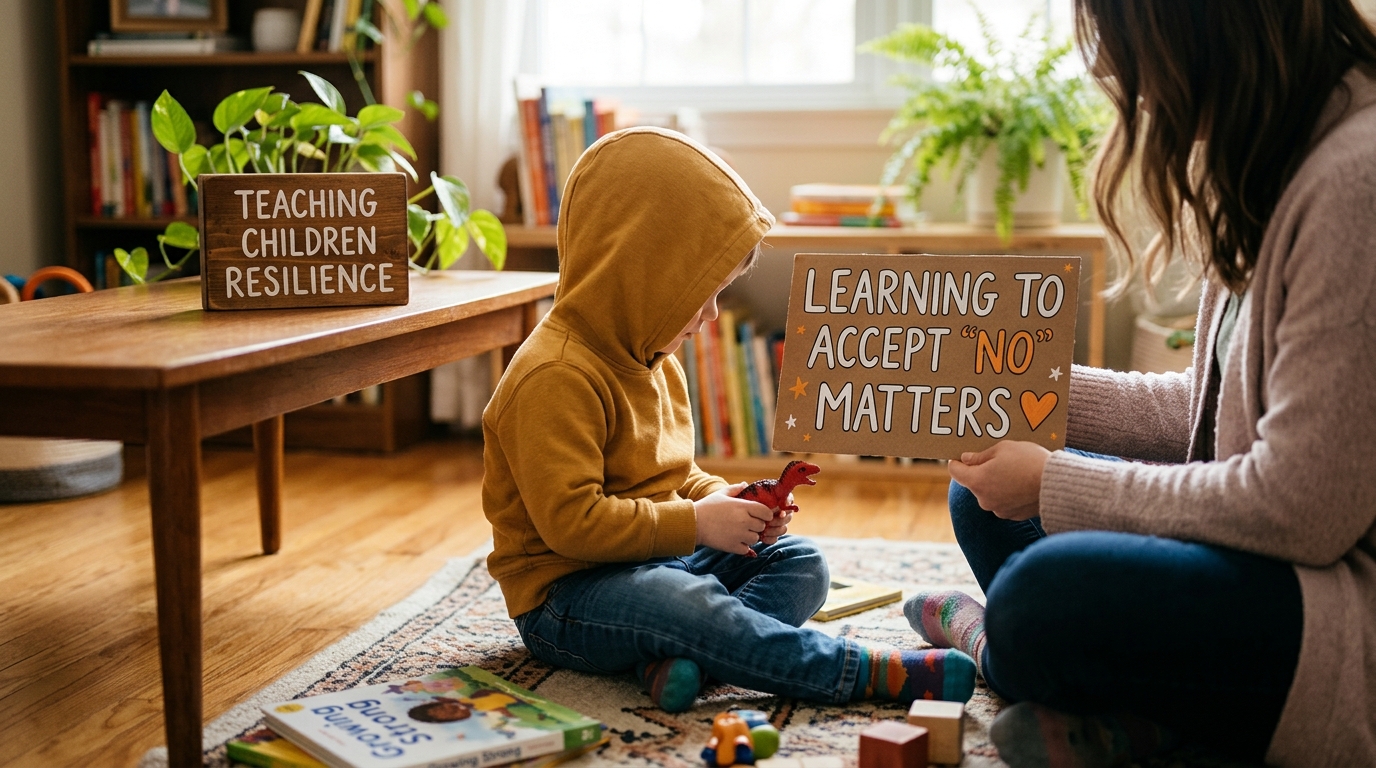
Teaching children resilience is one of the most valuable things parents and educators can do to prepare children for life. Children need love, encouragement and emotional support, but they also need to learn how to handle disappointment, accept reasonable boundaries and work through challenges.
As parents, our hearts are wired to protect our children. We want to see them happy, comfortable, confident and free from pain. When they are upset, we rush to soothe them. When they complain, we want to fix the problem. When they say “no,” we often hesitate to challenge them for fear of damaging their self-esteem or losing their trust.
Yet one of the greatest truths of parenting is this:
Not everything a child says should be accepted, and not every discomfort should be removed.
A child who says, “I don’t want to study,” still needs to learn.
A child who says, “I don’t want to share,” still needs to understand generosity.
A child who says, “I don’t like being corrected,” still needs guidance.
Feelings deserve to be heard, but they do not always need to determine the outcome.
Why Teaching Children Resilience Matters
Some of life’s most important lessons are learned through struggle, disappointment, patience and perseverance.
Character is not built when everything goes a child’s way. Character develops when children face challenges and discover that they are stronger and more capable than they thought.
When a child hears “no,” they can learn resilience.
When they wait their turn, they learn patience.
When they are held accountable for their choices, they learn responsibility.
When they experience reasonable consequences, they learn that actions have outcomes.
And when they work through difficulties instead of being rescued from every uncomfortable situation, they can develop confidence that praise alone cannot provide.
Teaching children resilience does not mean exposing them to unnecessary hardship. It means giving them age-appropriate opportunities to experience difficulty while providing the support they need to manage it.
The Harvard Center on the Developing Child explains that resilience develops through supportive relationships, skill-building and positive experiences. Parents can learn more from the Harvard Center on the Developing Child’s guidance on resilience.
Children Need to Learn That “No” Is Sometimes the Answer
In today’s world, we often hear that children should always express themselves.
This is true.
Their voices matter.
Their feelings matter.
Their opinions matter.
But there is another lesson that matters just as much:
“No” is a complete word.
Children need to learn that they will not always get what they want, when they want it or in the way they want it.
The world will not bend to every preference, and preparing children for this reality is an important part of raising resilient children.
This does not mean dismissing their emotions.
Instead, parents can acknowledge the emotion while maintaining a reasonable boundary.
For example:
“I understand that you are disappointed, but the answer is still no.”
This teaches children an important lesson:
Your feelings are valid, but feelings do not always change a decision.
Listening to Children Does Not Mean Always Saying Yes
Good parenting involves listening.
However, listening does not mean agreeing with everything a child says.
A parent can listen to a child’s frustration while still maintaining a boundary.
A teacher can understand a student’s disappointment while still expecting responsibility.
A child can express anger without being allowed to behave disrespectfully.
This balance is important because teaching children resilience involves helping them understand that difficult emotions can be managed without immediately changing the situation.
Children can learn to say:
“I am disappointed.”
“I don’t like this decision.”
“I wish things were different.”
And eventually:
“I can handle this.”
That is an important step towards emotional maturity.
How Parents Can Teach Children Resilience
Resilience is not developed through one conversation. It develops through everyday experiences.
Parents can use ordinary situations to help children practise patience, responsibility, problem-solving and emotional regulation.
1. Allow Small Disappointments
Children do not need every disappointment removed immediately.
Their favourite snack may not be available.
A game may end.
Plans may change.
They may not win a competition.
Instead of immediately fixing the situation, allow children to experience the emotion.
You can say:
“I know you are disappointed. It is okay to feel upset. Let’s think about what we can do next.”
This shows children that disappointment is uncomfortable but manageable.
2. Set Clear and Consistent Boundaries
Children benefit from knowing what is expected of them.
Boundaries can apply to:
- Homework
- Screen time
- Bedtime
- Sharing
- Respectful communication
- Household responsibilities
- Schoolwork
- Personal behaviour
Clear boundaries give children structure while allowing them to practise self-control.
The American Academy of Pediatrics recommends clear and consistent rules, age-appropriate explanations and calm consequences as part of healthy discipline. Parents can read the American Academy of Pediatrics guidance on healthy discipline strategies for more information.
3. Let Children Experience Reasonable Consequences
If a child forgets their homework, parents do not always need to rush to school to solve the problem.
If they leave a favourite toy outside and it gets damaged, they may learn from the experience.
If they repeatedly delay a task, they may have less time to complete it.
Consequences should be reasonable, related and age-appropriate.
The purpose is not to make children suffer.
The purpose is to help them understand responsibility.
4. Encourage Children to Solve Problems
Instead of immediately providing an answer, ask questions.
Try:
“What do you think we could do?”
“What other option could work?”
“What would you do differently next time?”
These questions encourage children to think independently.
Problem-solving is an important part of building resilience in children because it helps them move from frustration towards action.
Parents can also encourage cooperation and problem-solving through activities that develop teamwork. Read more about how schools can teach children the value of teamwork.
5. Teach Children That Mistakes Are Part of Learning
A child who gets an answer wrong is not a failure.
A child who loses a competition is not a failure.
A child who struggles with a difficult subject is not a failure.
Children need opportunities to understand that mistakes can provide information.
Instead of saying:
“You are not good at this.”
Try:
“This is difficult right now. What could you try differently?”
This encourages children to focus on effort, strategy and learning rather than believing that difficulty means they cannot succeed.
6. Model Resilience Yourself
Children watch what adults do.
If parents respond to frustration by shouting, blaming or giving up, children may learn those responses.
If parents pause, communicate calmly, accept mistakes and try again, children see resilience in action.
One of the most powerful ways of teaching children resilience is therefore to model it.
Children learn from what they repeatedly see.
Positive Parenting Means Warmth and Boundaries
There is an important difference between firm parenting and harsh parenting.
Teaching children resilience does not require shouting, humiliation, threats or physical punishment.
Children need warmth and structure at the same time.
Parents can communicate:
“I understand how you feel.”
“I know this is disappointing.”
“You are allowed to be upset.”
“But this boundary still matters.”
UNICEF explains that positive parenting combines affection and listening with clear limits and calm, non-violent discipline. Parents can explore the UNICEF positive parenting guidance for practical information.
The goal is not to make children afraid of hearing “no”.
The goal is to help them understand that being disappointed does not mean being unloved.
Why Accepting “No” Builds Emotional Maturity
A child who believes that every “no” must eventually become a “yes” may struggle when life becomes more demanding.
School, friendships, university, employment and adult relationships all involve boundaries and disappointment.
Children will not always receive the grade they hoped for.
They will not always make the team.
They will not always get the role they wanted.
They will not always be invited.
They will not always win.
They will not always get their preferred outcome.
Teaching children resilience helps them understand that disappointment is part of life and does not define their worth.
Learning to accept “no” can help children develop:
- Emotional regulation
- Patience
- Empathy
- Responsibility
- Self-control
- Respect for boundaries
- Problem-solving skills
- Independence
- Confidence
- Perseverance
These qualities can support children well beyond their school years.
Respecting Other People’s Boundaries
Children also need to understand that other people have boundaries.
A friend may decline an invitation.
A classmate may not want to share something.
A teacher may disagree with an idea.
A university may reject an application.
An employer may choose another candidate.
Someone may simply say, “No.”
A respectful person understands that another person’s “no” does not automatically require interrogation, persuasion or an argument.
Sometimes “no” is simply a decision, boundary or preference that deserves to be respected.
At the same time, children should understand that their own boundaries matter too.
Teaching children to respect “no” should never mean teaching them to tolerate bullying, unsafe behaviour, abuse or inappropriate requests.
The lesson is about mutual respect.
Their “no” matters. Other people’s “no” matters too.
How Schools Help Build Resilient Children
Parents are not the only people involved in teaching children resilience.
Schools also play an important role in helping students develop responsibility, communication, cooperation, perseverance and problem-solving skills.
At Schola Nova, learning goes beyond academic subjects. The school’s Life Skills Programme supports children’s development through practical skills such as communication, teamwork, decision-making, resilience, empathy and personal responsibility.
Parents can explore the Schola Nova Life Skills Programme to learn more about how practical skills and character development are incorporated into student learning.
These skills complement academic learning and help students prepare for challenges both inside and outside the classroom.
Parents can also explore Schola Nova’s academic programmes to learn more about its broader approach to student development.
Building Resilience Without Removing Compassion
There is no contradiction between compassion and boundaries.
Children need parents who listen when they are upset.
They need adults who acknowledge their fears.
They need teachers who encourage them when learning becomes difficult.
They also need adults who can calmly say:
“I understand how you feel, but the answer is still no.”
This balance teaches children that difficult emotions are not dangerous.
Disappointment can be managed.
Mistakes can be corrected.
Challenges can be approached.
Boundaries can be respected.
Problems can be solved.
This is at the heart of raising resilient children.
What Parents Should Avoid
While boundaries are important, parents should avoid turning every situation into a power struggle.
Avoid:
- Shaming children for having feelings
- Dismissing genuine concerns
- Using fear to force obedience
- Comparing children with siblings or classmates
- Using physical punishment
- Expecting children to obey without allowing appropriate communication
- Treating every mistake as a character flaw
- Removing every challenge from a child’s life
- Ignoring signs that a child genuinely needs support
The goal is not to raise children who are afraid to say “no”.
The goal is to raise children who understand that healthy relationships involve both speaking and listening, expressing feelings and respecting boundaries.
Parents and Schools Working Together
Children benefit when parents and schools send consistent messages about responsibility, respect and resilience.
At home, parents can encourage children to solve problems independently.
At school, teachers can give students opportunities to collaborate, make decisions and learn from mistakes.
Together, these experiences can help children become more confident and capable.
Schola Nova’s wider approach to student development includes academic learning, life skills, teamwork and co-curricular experiences.
Parents interested in learning more about the school’s educational approach can explore the Cambridge IGCSE Programme at Schola Nova.
Families considering admission can also learn more about how to apply to Schola Nova.
Building Resilience Through Everyday School Experiences
Resilience is strengthened when children have opportunities to participate, try, make mistakes, reflect and try again.
Activities beyond traditional classroom learning can provide valuable opportunities for this development.
Through Schola Nova’s outdoor activities, students can experience teamwork, responsibility, participation and challenges in different environments.
These experiences can complement academic learning and contribute to children’s broader personal development.
Frequently Asked Questions About Teaching Children Resilience
How can I teach my child to handle disappointment?
Start with small, age-appropriate disappointments. Acknowledge your child’s feelings without immediately fixing the situation. Then encourage them to think about what they can do next.
How does saying “no” help children?
A reasonable “no” can help children develop patience, self-control, emotional regulation and an understanding of boundaries. The key is to communicate boundaries calmly and consistently.
Should parents always explain why they said no?
An explanation can be helpful, especially when children are learning. However, children also need to understand that every decision does not have to become a prolonged debate.
Does teaching resilience mean allowing children to struggle?
Children benefit from facing manageable, age-appropriate challenges. However, resilience should be developed alongside emotional support and safe, caring relationships. Parents should step in when a situation is unsafe, overwhelming or beyond a child’s ability to manage.
How can schools help children become resilient?
Schools can provide opportunities for teamwork, problem-solving, leadership, responsibility, learning from mistakes and managing challenges. These experiences can complement the support children receive at home.
What is the most important lesson parents can teach about “no”?
Children can learn that disappointment does not mean rejection, disagreement does not mean disrespect and another person’s boundary deserves to be respected.
A Final Message for Parents
Listening to our children does not mean surrendering our judgement.
Empathising with them does not mean removing every obstacle.
Loving them does not mean agreeing with everything they say.
True love sometimes says, “I understand how you feel, but the answer is still no.”
True love sometimes allows a child to experience an age-appropriate challenge because growth can happen on the other side of difficulty.
As parents and educators, our goal is not to raise children who are comfortable all the time.
Our goal is to raise young people who are kind, resilient, respectful, disciplined and capable of navigating life’s inevitable challenges.
One day, our children will leave our homes and step into a world that will not always accommodate them.
The strength they will need then is being built by the boundaries, expectations and lessons we provide today.
Let us listen to our children with compassion, guide them with wisdom and remember that while happiness is important, character is essential.
Because in the end, the greatest gift we can give our children is not a life without struggle, but the strength to rise above it.
Character is built through challenge, not constant comfort.
And one of the most powerful lessons we can teach our children is that they can survive disappointment, grow through challenges and respect both their own boundaries and those of others.
Warm regards,
Schola Nova