IGCSE vs O Level in Pakistan at Schola Nova Cambridge School

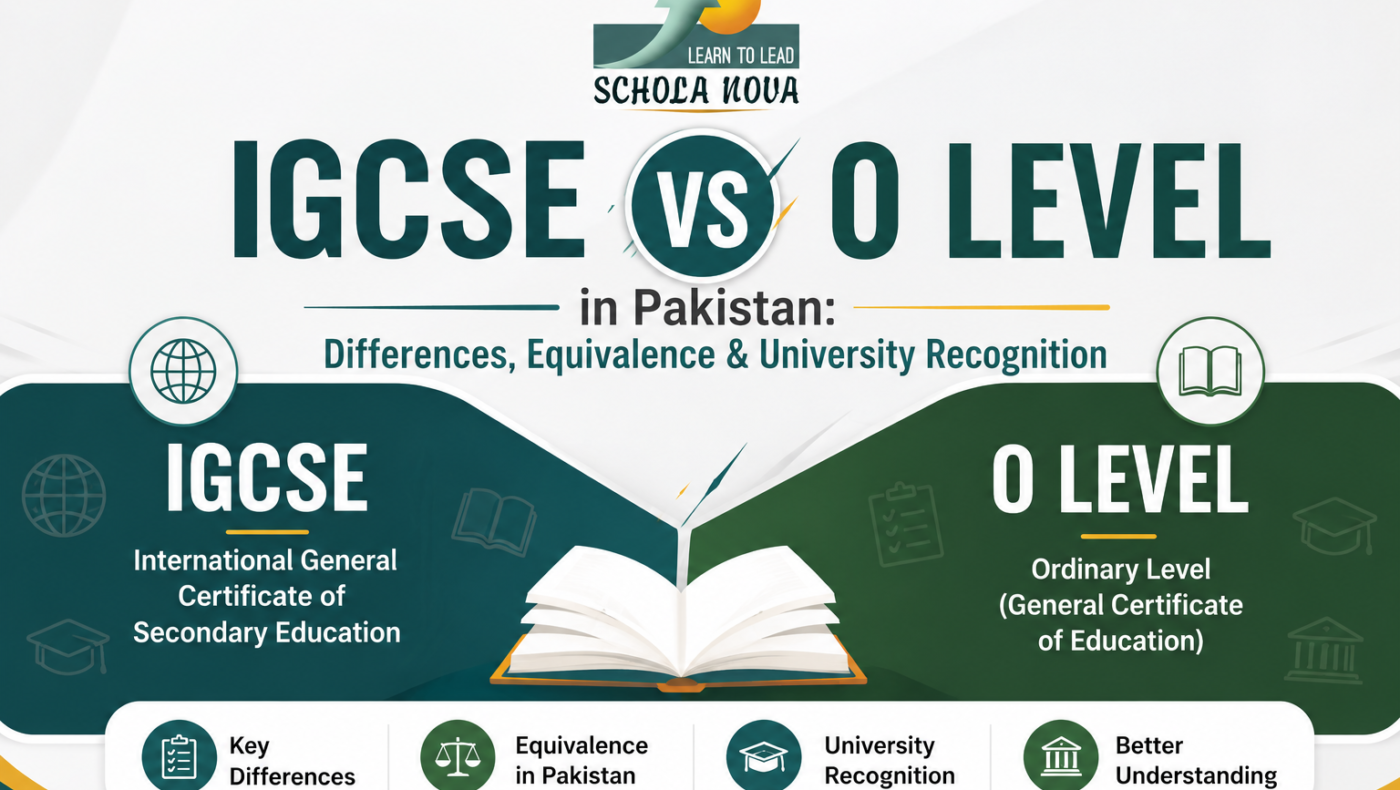
IGCSE vs O Level in Pakistan: Differences, Equivalence & University Recognition

Choosing the right educational pathway for a child is rarely just about selecting subjects or comparing qualifications. For parents, it is often about looking ahead: What will suit my child best? Will this qualification be recognised? What options will it open for university? And how can we make sure that the choices we make today support the future they hope to build tomorrow?

One of the questions many families exploring Cambridge education in Pakistan find themselves asking is: IGCSE vs O Level in Pakistan — what is the difference, and which one is better for my child?

The answer is not as simple as choosing one over the other.

Both Cambridge IGCSE and Cambridge O Level are internationally recognised and academically respected qualifications. However, they can differ in curriculum structure, assessment methods, subject options and the learning experience they offer. Most importantly, for Pakistani families, both qualifications can lead towards the same level of equivalence when the relevant requirements are fulfilled.

At Schola Nova, we believe education should never begin with the question, “Which qualification sounds better?” Instead, we encourage families to ask a more meaningful question:

Which pathway, learning environment and subject combination will help my child grow into the person they are capable of becoming?

Every child learns differently. Every student carries different strengths, interests and ambitions. While qualifications are important, the journey through those qualifications matters just as much.

This guide explores the IGCSE vs O Level difference, IGCSE equivalence in Pakistan, O Level equivalence, subject selection, university recognition and the factors parents should consider when choosing the right Cambridge pathway for their child.


IGCSE vs O Level in Pakistan: Understanding the Basics

Both Cambridge IGCSE and Cambridge O Level are internationally recognised secondary-level qualifications designed for students generally studying during their teenage years.

Cambridge considers O Level and IGCSE comparable qualifications, but individual subjects can have different structures and assessment methods. These differences may include subject availability, syllabus design, assessment approaches, coursework opportunities and grading structures.

For families researching a Cambridge school in Islamabad, it is therefore important to understand the actual subjects and syllabuses offered by a school rather than choosing a qualification based only on its name.

This is why the question should not simply be:

Is IGCSE better than O Level?

Instead, parents should consider:

  • What subjects does my child enjoy and perform well in?
  • How does my child learn best?
  • What assessment style suits them?
  • What subjects might they need for future A Levels?
  • What university or career pathways might they wish to explore later?
  • Does the school provide the academic guidance and individual support my child needs?

At Schola Nova, we see these questions as part of a much bigger educational conversation. A child’s academic pathway should not feel like a race to collect qualifications. It should be a carefully supported journey where curiosity is encouraged, strengths are recognised and students gradually develop the confidence to make informed decisions about their own futures.

Parents can also explore the Cambridge IGCSE programme at Schola Nova to understand the school’s wider academic approach.


What Is Cambridge IGCSE?

Cambridge IGCSE, or the International General Certificate of Secondary Education, is an internationally recognised qualification generally taken by students between the ages of 14 and 16.

One characteristic of the IGCSE pathway is its broad subject offering and its emphasis on developing skills alongside subject knowledge. Depending on the subject and syllabus, students may develop abilities in analysis, research, communication, problem-solving and practical application.

At Schola Nova, students following the Cambridge pathway are encouraged to engage with learning as something more than memorising information for an examination. Subjects become spaces for questioning, exploring ideas, connecting concepts and discovering individual interests.

Students may explore academic areas including:

  • Mathematics
  • English
  • Biology
  • Chemistry
  • Physics
  • Economics
  • Business
  • Accounting
  • Computer Science
  • Humanities and other available subject areas

Each IGCSE syllabus has its own assessment structure. Depending on the subject, students may complete written examinations, practical components, oral assessments or coursework where applicable.

For some students, this variety can provide opportunities to demonstrate learning in different ways. However, it is important not to assume that IGCSE is automatically easier or more difficult than O Level. Each subject has its own requirements, and the right choice depends on the student’s individual strengths and the programme offered by the school.

Families can also review the official Cambridge IGCSE information when researching the qualification.


What Is Cambridge O Level?

Cambridge O Level is another internationally recognised secondary-level qualification.

It develops subject knowledge while supporting skills such as creative thinking, enquiry and problem-solving. Like IGCSE, O Level gives students the opportunity to study a range of academic subjects and prepare for further education.

One of the practical differences often discussed when comparing IGCSE vs O Level in Pakistan relates to assessment. Assessment varies according to the subject, but O Level programmes are generally more examination-focused and may offer fewer coursework options than some IGCSE subjects.

However, this difference should not be interpreted as a measure of academic value.

A student who thrives in an examination-focused environment may feel perfectly suited to one pathway. Another student may benefit from a subject structure that includes practical or alternative assessment components where available.

The key is understanding the specific syllabus rather than making assumptions based solely on the qualification name.


IGCSE vs O Level: The Key Differences

When parents compare IGCSE or O Level in Pakistan, several areas usually become important.

1. Assessment Methods

Assessment is one of the most noticeable differences between the two qualifications.

Cambridge IGCSE subjects may include a combination of written examinations, practical work, oral components and coursework, depending on the syllabus. O Level subjects can also vary in their assessment methods but generally provide fewer coursework options.

For parents, this means it is important to look beyond the qualification title.

A child may be highly capable academically but demonstrate their understanding differently depending on the assessment method. Some students feel comfortable with formal examinations, while others may benefit from practical or coursework-based opportunities where available.

Understanding how a particular subject is assessed can therefore be just as important as deciding whether to choose IGCSE or O Level.

2. Subject Choices and Availability

Both pathways offer a wide range of subjects, but the actual choices available to a student depend on the school and the syllabuses it offers.

This becomes particularly important when students begin developing an interest in a future career.

A student considering medicine, for example, may need to plan science subjects carefully. A student interested in business, economics, computing, engineering, psychology or the humanities may require a different academic combination.

This is where thoughtful guidance becomes essential.

At Schola Nova, we believe subject selection should not be treated as a formality. A subject choice made today can influence the options available tomorrow. Students and families should therefore consider the larger academic journey rather than viewing IGCSE or O Level as an isolated stage.

The journey is often better understood as:

Secondary Qualification → A Levels → University → Future Career

Each stage informs the next.

3. Curriculum and Learning Experience

The IGCSE vs O Level difference can also appear in the structure of individual syllabuses.

Both qualifications are academically rigorous and internationally recognised, but individual subjects may approach learning differently. Some IGCSE syllabuses may provide greater flexibility in assessment or practical application, while O Level subjects may follow a more traditional examination-focused structure.

For this reason, parents should always explore the exact subjects being offered.

The qualification name alone does not tell the entire story.

A strong educational experience depends on how the curriculum is taught, how students receive support when they struggle and whether the school helps them move beyond examination preparation.

At Schola Nova, we believe meaningful education happens when students understand why they are learning something, not simply what they need to remember.

4. Grading and Academic Equivalence

Individual Cambridge qualifications and syllabuses can have different grading structures.

However, parents should not assume that a particular grade in one qualification is automatically more valuable than the same grade in another.

Cambridge recognises IGCSE and O Level as comparable qualifications, while Pakistani students must also consider how their subjects and grades fit within the country’s equivalence framework.

This brings us to one of the most important concerns for families in Pakistan.


Is IGCSE Equivalent to O Level in Pakistan?

Yes, subject to the applicable equivalence requirements.

For families considering Cambridge education in Pakistan, this is an important point to understand.

Cambridge confirms that IGCSE and O Level can receive the same equivalence under Pakistan’s educational framework, subject to meeting the relevant requirements. GCSE, IGCSE and GCE O Level qualifications may be considered equivalent to the Pakistani Secondary School Certificate (SSC) when the applicable scheme-of-studies conditions are fulfilled.

This means that choosing IGCSE instead of O Level does not automatically place a student at a different level within the Pakistani secondary education system.

What matters is whether the student meets the applicable requirements for equivalence.

For parents, this is why careful academic planning is so important. Choosing subjects simply because they appear easier, more popular or more interesting without considering equivalence requirements can create complications later.

A child’s academic pathway deserves thoughtful planning from the beginning.


How Does IGCSE Equivalence in Pakistan Work?

The Inter Boards Coordination Commission (IBCC) is responsible for determining the equivalence of foreign qualifications within the Pakistani education system.

For students appearing for examinations from Pakistan, the requirements described in the source material include eight subjects for SSC equivalence:

  • English
  • Mathematics
  • Urdu
  • Islamiyat
  • Pakistan Studies
  • Three elective academic subjects

The minimum passing grade for the applicable subjects is E, according to the requirements outlined in the source document.

However, academic and equivalence policies can change. Families should always verify the latest requirements before finalising subject choices or making long-term academic decisions.

For current information, parents should check the official IBCC website before making decisions about equivalence.

This is especially important for students who may later wish to pursue specialised fields.

A decision that seems small in Year 9 or Year 10 can become much more significant when a student begins applying for A Levels or university programmes.


Why Subject Selection Matters So Much

Choosing between IGCSE and O Level in Pakistan is not only about completing secondary school.

The subjects a student studies can influence the academic opportunities available to them later.

For example, students considering pre-medical or pre-engineering pathways need to pay particular attention to science subject requirements. Specific study groups and future pathways may require particular subject combinations.

This is why we believe students should never have to navigate these decisions alone.

At Schola Nova, education is not simply about placing a timetable in front of a student and asking them to choose. It is about conversation.

It is about asking:

What interests you?

Where do you see yourself in the future?

What are you naturally curious about?

Which subjects challenge you in a healthy way?

What support might you need to achieve your goals?

Sometimes students know exactly where they are heading. Other times, they do not — and that is perfectly alright too.

Education should leave room for exploration.

The purpose of academic guidance is not to force a child into a predetermined future. Instead, it should ensure that students have enough information and support to keep meaningful doors open as their interests develop.


Are IGCSE and O Level Recognised by Pakistani Universities?

Yes.

Cambridge qualifications are recognised within Pakistan’s higher education landscape, and students can continue their academic journey after completing the required qualifications and obtaining the relevant equivalence.

However, equivalence and university admission are not exactly the same thing.

Individual universities and degree programmes can establish their own eligibility requirements. Programmes in medicine, engineering, computing and other specialised fields may require particular subjects, grades or additional qualifications.

Students should therefore check the current requirements of their intended institutions before making final subject decisions.

This is an important message for both students and parents:

Do not wait until university applications to begin thinking about academic requirements.

Future planning should begin much earlier.

Not with pressure.

Not with fear.

But with awareness.

A well-informed student has more opportunities to make choices confidently.


Can IGCSE Students Study at Pakistani Universities?

Yes.

Students who complete the necessary secondary-level qualifications and meet applicable equivalence requirements can continue towards higher education in Pakistan.

The Cambridge pathway commonly progresses from IGCSE or O Level towards AS & A Levels or another recognised higher-secondary qualification. Cambridge A Levels can also be equated to Pakistan’s Higher Secondary School Certificate (HSSC), subject to the applicable requirements.

This is why secondary-level subject selection should ideally be considered alongside possible future A Level plans.

A student does not need to have their entire life planned at the age of 14 or 15.

They should, however, receive enough guidance to understand how today’s decisions may influence tomorrow’s possibilities.


IGCSE vs O Level for Pakistani Students: Which Is Better?

There is no universal winner.

IGCSE is not automatically better than O Level. O Level is not automatically better than IGCSE.

The better choice depends on the individual student.

Your Child’s Learning Style

Students learn differently.

Some feel comfortable demonstrating their knowledge primarily through written examinations. Others may benefit from practical, oral or coursework components where a syllabus offers them.

Understanding how a child learns can be an important part of choosing the right academic environment.

Future Academic Goals

Students should consider possible A Level subjects and university pathways before making final secondary-level subject selections.

This does not mean forcing a 14-year-old to choose an entire career. Instead, it gives them the information needed to make informed choices.

Quality of the School Experience

The qualification itself is important.

So is the school delivering it.

A student may study an excellent curriculum and still struggle if they do not receive the guidance, encouragement and academic support they need.

Parents should therefore look at:

  • The expertise of the academic team
  • The quality of teaching
  • Subject availability
  • Examination preparation
  • Individual academic support
  • Opportunities for critical thinking
  • Communication and leadership development
  • The school’s ability to understand students as individuals

A school should not simply prepare students to pass examinations.

It should prepare them to believe that they are capable of thinking, questioning, communicating and contributing.


What Should Parents Look for in a Cambridge School?

Choosing a school is often one of the most personal decisions a family can make.

A school becomes part of a child’s everyday life. It shapes their relationship with learning, influences their confidence and often becomes the place where friendships, interests and ambitions begin to grow.

When exploring Cambridge schools in Islamabad or considering a Cambridge pathway, parents may wish to look beyond examination results alone.

Academic Support

What happens when a student struggles?

A strong academic environment recognises that needing help is not a weakness. Students should feel comfortable asking questions, revisiting difficult concepts and receiving the support they need to progress.

Examination Preparation

Students need more than knowledge.

They also need to understand how to apply that knowledge, manage time and approach different assessment formats with confidence.

Teacher Expertise

Strong subject knowledge matters.

Teachers who understand both their subjects and their students can make a meaningful difference to the learning experience.

Personal Development

A student’s education should not end with a grade.

Confidence, communication, creativity, critical thinking and emotional maturity are also part of preparing young people for the world beyond school.

Future Pathway Planning

Students should receive support as they think about subjects, A Levels, university options and future possibilities.

At Schola Nova, our approach is rooted in the belief that education is deeply personal.

Every student enters the classroom with a different story, different strengths and a different way of seeing the world.

Our responsibility is not to make every child identical. It is to help each one find their own voice.


The Schola Nova Approach to Cambridge Education

For us, education has always been about more than academic achievement.

Since becoming part of Islamabad’s educational community in 1998, Schola Nova has grown around the belief that children need both knowledge and confidence — both academic direction and the freedom to discover who they are.

Our Cambridge pathway brings together academic learning, concept-based understanding, critical thinking, personalised guidance and future planning.

Within our academic environment, students are encouraged not simply to learn answers but to ask meaningful questions.

To be curious.

To communicate.

To challenge themselves.

To make mistakes without believing that mistakes define them.

And gradually, to develop the confidence to take ownership of their own learning journey.

Because a child’s school years should not be remembered only as a series of examinations.

They should also be remembered as the years when a teacher believed in them.

When a difficult concept finally made sense.

When they discovered a subject they genuinely loved.

When they found the courage to speak in front of others.

When they realised that they were capable of more than they had imagined.

That is the kind of growth we hope to nurture at Schola Nova.

Learn more about Schola Nova’s history and educational approach.


A Simple Guide for Parents: How to Decide Between IGCSE and O Level

If you are still wondering whether IGCSE or O Level is the right choice for your child, begin with a few simple questions.

1. Does the school offer the subjects my child may need?

Look at the actual subject combinations available rather than focusing only on the qualification title.

2. How is each subject assessed?

Explore the assessment structure of the specific syllabus.

3. What are my child’s strengths?

Consider whether your child is comfortable with traditional examination-based assessment or whether different assessment opportunities may suit their learning style.

4. What future pathways might they wish to keep open?

Think ahead to possible A Level subjects and university aspirations.

5. Will the qualification meet equivalence requirements?

Always check the latest applicable IBCC guidance before finalising subjects.

6. Does the school provide the right environment?

Academic success depends not only on curriculum but also on teaching quality, support, encouragement and the relationship a student develops with learning.

These questions can help families move away from the idea of finding the universally “best” qualification. Instead, they can focus on finding the right pathway for their own child.


IGCSE vs O Level in Pakistan: The Final Verdict

So, IGCSE vs O Level in Pakistan — which one should you choose?

The answer is not about finding a qualification with a more impressive name.

Both pathways are internationally recognised, academically respected and can lead to the same level of SSC equivalence in Pakistan when the applicable requirements are fulfilled. The differences are more closely connected to individual syllabuses, curriculum design, assessment methods and subject availability.

The most meaningful decision is therefore one that considers the whole child.

Their strengths.

Their learning style.

Their interests.

Their future possibilities.

And the environment in which they will spend some of the most formative years of their lives.

At Schola Nova, we know that choosing a school is not simply an administrative decision for parents.

It is an act of trust.

You are trusting a school with your child’s questions, their growing confidence, their uncertainties and their dreams.

And we believe that trust should be met with care.

Whether a child follows IGCSE, O Level or another carefully planned academic pathway, what matters most is that they receive the opportunity to learn with understanding, grow with confidence and move forward knowing that their future does not have to be chosen all at once.

Sometimes, the most important thing a school can do is simply help a child see the possibilities that are waiting ahead.

And then walk beside them as they begin to discover which one is theirs.

If you are considering a Cambridge pathway for your child, explore the Schola Nova admissions process or contact Schola Nova for further information.


Frequently Asked Questions

Is IGCSE better than O Level in Pakistan?

Neither qualification is automatically better. Cambridge considers IGCSE and O Level comparable qualifications, although individual subjects can differ in syllabus content, assessment methods and availability.

Is IGCSE equivalent to O Level in Pakistan?

Yes, subject to the applicable equivalence requirements. Both qualifications can receive the same level of SSC equivalence under the relevant Pakistani framework when the required conditions are fulfilled.

Is IGCSE equivalent to Matric in Pakistan?

Cambridge IGCSE may be equated to Pakistan’s Secondary School Certificate (SSC) when the applicable scheme-of-studies requirements are fulfilled.

Are IGCSE and O Level recognised by Pakistani universities?

Yes. However, individual universities and degree programmes may have their own admission requirements regarding subjects, grades and eligibility.

How many subjects are required for IGCSE or O Level equivalence in Pakistan?

According to the requirements outlined in the source material for examinations taken from Pakistan, eight subjects are required, including English, Mathematics, Urdu, Islamiyat, Pakistan Studies and three elective academic subjects.

What comes after IGCSE or O Level?

Students can progress towards Cambridge International AS & A Levels or another recognised higher-secondary pathway, depending on their academic plans and applicable requirements.


Conclusion

The decision between IGCSE and O Level is ultimately about much more than qualification names.

Parents should consider the student’s strengths, learning style, subject interests, future academic plans, equivalence requirements and the quality of the school environment.

With the right guidance, students can move through their Cambridge journey with greater confidence and a clearer understanding of the opportunities ahead.

At Schola Nova, we believe that education should prepare students not only for examinations, but also for the world beyond school.
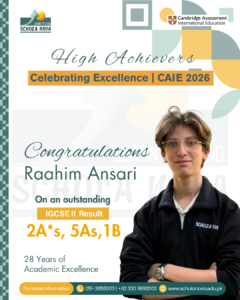
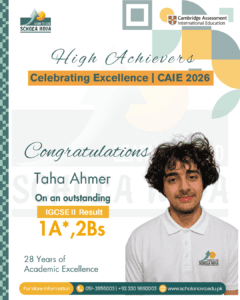
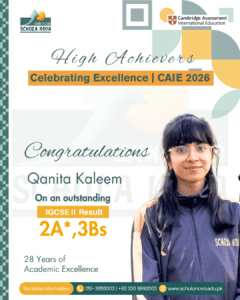
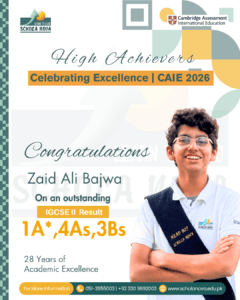
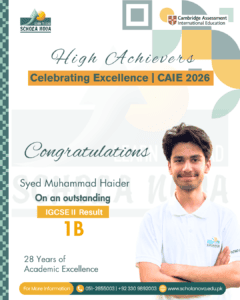
Best Cambridge IGCSE school in Islamabad Schola Nova CAIE 2026 results

Reasons Schola Nova Is the Best Cambridge IGCSE School in Islamabad This Year

Some results days come and go quietly. This one didn’t.

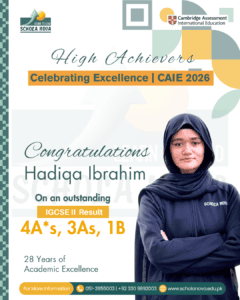
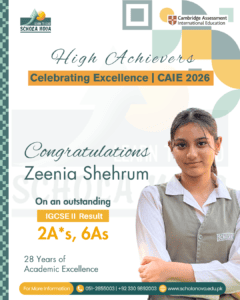
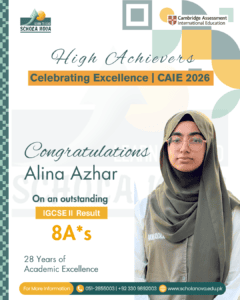
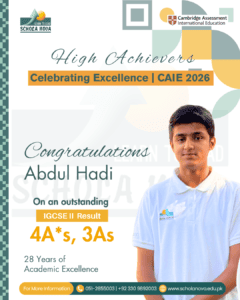
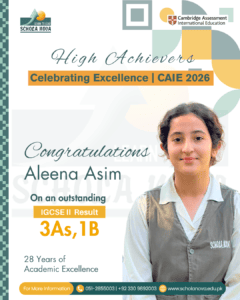
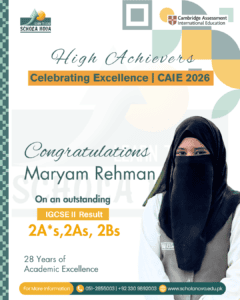
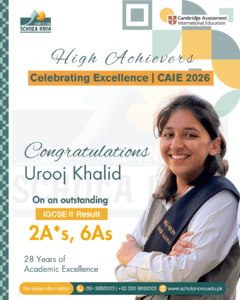
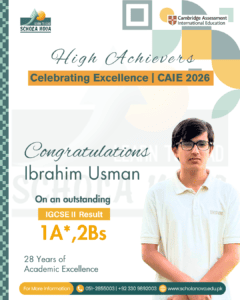
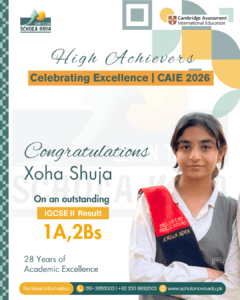
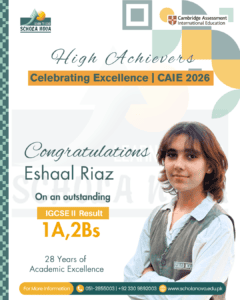
When Schola Nova’s CAIE 2026 results were announced, the school community had plenty to celebrate. Outstanding grades, impressive academic performances and the hard work of students and teachers came together to mark another important milestone in the school’s 28-year journey.

For parents searching for the best Cambridge IGCSE school in Islamabad, results day offers an opportunity to look beyond a single examination cycle and understand what really lies behind academic performance: experienced teachers, consistent preparation, student support, a focused learning environment and a culture that encourages learners to aim higher.

But what makes a school stand out isn’t simply a results sheet. It is the complete educational experience students receive throughout their Cambridge IGCSE journey.

More Than Just a Results Day

Academic results are important.

But at Schola Nova, success has never been viewed simply as a collection of grades.

The school’s Results Day message reflected this philosophy by reminding students that:

“Success is measured by courage, character, and the dreams you keep chasing — not just by a set of results.”

Students were also encouraged to remember that one examination outcome does not define their future.

This perspective matters because Cambridge IGCSE is academically demanding. Students are expected to develop subject knowledge alongside analytical thinking, problem-solving and the ability to apply what they have learned.

According to Cambridge International’s official Cambridge IGCSE information, assessment can include written, oral, coursework and practical components depending on the subject.

That means effective IGCSE preparation requires more than memorisation. Students need understanding, application and confidence.

At Schola Nova, the wider educational goal is to help learners develop:

  • Confidence
  • Resilience
  • Curiosity
  • Critical thinking
  • Communication skills
  • Independent learning
  • Character and responsibility

CAIE 2026: A Reflection of Academic Excellence

The CAIE 2026 results represent another important milestone for Schola Nova.

Cambridge International reported that students worldwide received their June 2026 Cambridge IGCSE and O Level results on 18 August 2026, highlighting the global scale of the examination programme.

For Schola Nova students, the results represent months and years of preparation.

Strong academic performance depends on a consistent approach to learning. Students are encouraged to build their understanding rather than simply memorise information.

The academic journey focuses on developing:

  • Strong conceptual understanding
  • Critical and analytical thinking
  • Independent learning skills
  • Effective examination techniques
  • Time management
  • Problem-solving abilities
  • Academic confidence
  • Consistent study habits

These skills are particularly valuable during Cambridge IGCSE, where students need to demonstrate both what they know and how effectively they can apply their knowledge.

You can explore the school’s Cambridge IGCSE programme to learn more about its subjects, teaching approach, assessment structure and examination preparation.

Why Consistency Matters More Than a Single Result

When parents search for the best Cambridge IGCSE school in Islamabad, it is natural to look at the highest grades.

But there is another question worth asking:

What is happening across the wider academic environment?

A strong school should not depend on one exceptional performance. It should create a system where students across different subjects and year groups have the opportunity to perform at their best.

That requires consistency in four key areas.

1. Teaching

Teachers need a strong understanding of their subjects and the requirements of the Cambridge curriculum.

Schola Nova’s academic team includes subject specialists across areas such as English, Mathematics, Biology, Chemistry, Physics, Economics, Accounting, Business Studies and Computer Science.

2. Preparation

Students need structured revision, practice, feedback and examination strategies.

Cambridge IGCSE is designed to develop knowledge, understanding and skills, including creative thinking, enquiry and problem-solving.

3. Support

Learners need guidance when they struggle, not only when they succeed.

Academic support should help students identify gaps, improve their understanding and develop confidence over time.

4. Environment

A positive academic culture can encourage students to become more ambitious, independent and resilient learners.

Schola Nova’s learning environment combines academic learning with opportunities for creativity, communication, collaboration and practical development.

Two IGCSE Cohorts, One Academic Journey

The Cambridge pathway is not built in a single year.

Students develop their academic skills progressively as they move through the programme.

Younger learners begin developing the knowledge, study habits and confidence they will eventually need for their final IGCSE examinations. As they progress, they encounter greater academic challenges and increasingly complex concepts.

By the time students reach their final IGCSE year, the aim should not simply be to prepare them for an examination.

It should be to prepare them to think independently and approach challenges with confidence.

Cambridge International describes Cambridge IGCSE as a qualification for learners aged 14–16 and notes that it provides preparation for further study and other progression routes.

This makes the years leading to IGCSE an important part of a student’s overall academic development.

28 Years of Academic Experience in Islamabad

Schola Nova’s story began in 1998.

For 28 years, the school has been part of Islamabad’s educational community, evolving alongside changing educational needs and expectations. The school’s own history highlights its founding in 1998 and its long-term focus on nurturing thinkers, builders and leaders.

That experience matters.

Cambridge education requires schools and teachers to continually adapt. Teaching approaches evolve, technology changes, examination expectations develop and students have increasingly diverse learning needs.

A long-standing academic institution has the advantage of experience while still having the opportunity to embrace new approaches.

Schola Nova’s wider learning environment includes academic education alongside creative activities, sports and opportunities for students to develop practical and social skills. Its facilities include interactive classroom technology, libraries and purpose-built learning and play spaces.

The objective is simple:

Prepare students not only for their examinations, but for the world beyond them.

The Culture Behind the Results

Perhaps one of the most important things parents should consider when choosing a school is what happens when things don’t go according to plan.

Every student has strengths.

Every student has challenges.

And every student experiences moments when something doesn’t go as expected.

That is why a healthy academic culture should celebrate excellence without making students feel that their entire identity depends on a grade.

Schola Nova’s Results Day message captured this balance.

Students were encouraged to celebrate their achievements while also understanding that a result is only one part of a much bigger journey.

This approach can help create learners who are willing to try, learn from mistakes and keep improving.

Because confidence is not built by never experiencing failure.

It is built by learning how to respond to it.

What Should Parents Look For in a Cambridge IGCSE School?

If you’re currently comparing Cambridge schools in Islamabad, don’t make your decision based on one results graphic or one impressive grade.

Look at the bigger picture.

1. Academic Track Record

Look for evidence of academic performance and a structured approach to learning rather than relying on one exceptional result.

2. Cambridge Experience

Consider how experienced the school and its teachers are with the Cambridge curriculum and examination requirements.

3. Student Support

Ask how students are supported when they find a subject difficult or need additional academic guidance.

4. Learning Environment

A good school should provide an environment where students feel motivated to learn, ask questions and develop confidence.

5. Beyond the Examination

IGCSE results matter, but so do communication, creativity, critical thinking, leadership, collaboration and independence.

The best education prepares students for the next stage of life — not just the next examination.

The Schola Nova Difference

At Schola Nova, academic excellence is part of a larger educational philosophy.

Students are encouraged to become:

Curious Learners

Asking questions, exploring ideas and looking beyond the textbook.

Confident Communicators

Expressing their ideas clearly, respectfully and confidently.

Independent Thinkers

Analysing information, questioning assumptions and developing their own understanding.

Responsible Individuals

Understanding that education also involves character, responsibility and respect for others.

Future-Ready Learners

Developing skills required for an increasingly connected and changing world.

This combination of academic preparation and personal development is what makes the Cambridge journey meaningful.

You can also explore Schola Nova’s academic programmes to see how the school’s broader curriculum supports students at different stages of their education.

Why Cambridge IGCSE Is a Valuable Pathway

Cambridge IGCSE is internationally recognised and offers students a rigorous academic pathway.

Cambridge International states that Cambridge IGCSE is offered by thousands of schools worldwide across more than 70 subjects, while Cambridge qualifications are recognised by universities and institutions internationally.

For families in Pakistan, Cambridge International also explains that Cambridge IGCSE and O Level qualifications are equated to the local Secondary School Certificate through the relevant equivalence process.

This international dimension is one reason many families consider Cambridge education in Islamabad for their children.

However, the curriculum itself is only one part of the equation.

The school environment, teaching quality, academic support and student experience all contribute to how effectively a learner progresses through the Cambridge pathway.

Celebrating CAIE 2026

The CAIE 2026 results are a moment for the entire Schola Nova community to celebrate.

They represent months and years of preparation.

They represent teachers explaining difficult concepts, students practising challenging questions, families providing encouragement and learners returning to difficult topics until they understood them.

Most importantly, they represent a shared belief that every student has the potential to grow.

Results Day may be about grades.

But education is about what students become along the way.

Is Schola Nova the Best Cambridge IGCSE School in Islamabad?

Choosing the right school is one of the most important decisions parents make.

There may not be one school that is perfect for every child. But when evaluating the best Cambridge IGCSE school in Islamabad, parents should consider the complete educational experience.

Look at:

  • Academic preparation
  • Experienced teachers
  • Student support
  • Cambridge curriculum experience
  • Learning environment
  • Character development
  • Communication and collaboration
  • Opportunities beyond the classroom
  • Preparation for future education

With 28 years of academic experience and another important CAIE results season, Schola Nova continues to build on its long-standing commitment to education in Islamabad.

The 2026 results are not the end of the journey.

They are another milestone in it.

Thinking About Cambridge IGCSE for Your Child?

If you are looking for a Cambridge IGCSE school in Islamabad where academic learning is combined with confidence, character, creativity and a supportive learning environment, explore what Schola Nova has to offer.

You can learn more about the Schola Nova Cambridge IGCSE programme or explore the school’s admissions process.

For questions about admissions, you can also contact Schola Nova directly.

Admissions enquiries are open now.

📞 051-2855003 | +92 330 9892003
🌐 www.scholanova.edu.pk

Schola Nova
28 Years of Academic Excellence
Where today’s learners prepare for tomorrow’s world.


Frequently Asked Questions

What makes Schola Nova a Cambridge IGCSE school in Islamabad?

Schola Nova offers a dedicated Cambridge IGCSE programme for students and provides academic preparation through concept-based learning, continuous assessment, examination preparation and study skills development. The school’s IGCSE programme includes subjects across sciences, commerce, humanities and other academic areas.

What age group is Cambridge IGCSE designed for?

Cambridge IGCSE is generally designed for learners aged 14–16. Cambridge International describes it as an internationally recognised qualification that prepares students for further education and other progression routes.

Is Cambridge IGCSE recognised in Pakistan?

Yes. Cambridge International states that Cambridge IGCSE and Cambridge O Level qualifications are equated to the local Secondary School Certificate through the relevant Pakistani equivalence process.

How can I apply to Schola Nova?

Parents can visit Schola Nova’s How to Apply page for information about the admissions process and class allocation.

Where is Schola Nova located?

Schola Nova’s Senior Branch is located at 5, Street 8, F-8/3, Islamabad. The school also has a Junior Branch at 2, Street 8, F-8/3.

Why should parents compare more than IGCSE results?

Results are important, but parents should also consider teaching quality, academic support, learning environment, student development, curriculum experience and preparation for future education. A strong school experience is about developing students both academically and personally.

Future of Education: What Schools Will Look Like in the Next 10 Years

A Schola Nova Perspective on Learning, Growth, and the Child of Tomorrow

 There was a time when school meant rows of desks, a chalkboard at the front, and a quiet expectation to listen, memorise, and repeat. For many of us, that is the image we still carry. But if we pause and observe the world around us today, it becomes clear that education is gently, yet powerfully, transforming.

When parents now ask about the future of education and what schools will look like in the next 10 years, the question carries a deeper concern. It is not just about academics anymore. It is about readiness for life, adaptability, emotional strength, and the ability to thrive in an ever-evolving world.

At Schola Nova, we often reflect on this shift not as a distant prediction, but as a responsibility we hold in the present. Because the future of education is not something that will arrive suddenly; it is something we are shaping, day by day, in our classrooms, conversations, and connections with our students.

 From Classrooms to Learning Spaces

The schools of the future will not feel rigid or confined. Instead, they will feel alive.

Learning spaces will become more flexible, collaborative, and student-centered. The traditional idea of a classroom will expand into an environment where curiosity leads the way. Children will move between discussions, hands-on activities, creative exploration, and independent thinking often within the same lesson.

At Schola Nova, this transition has already begun. We see learning not as a fixed process, but as a journey that adapts to the needs of each child. The classroom is no longer just a place where information is delivered, it is where ideas are discovered, questioned, and shaped.

For parents searching for the best schools in Islamabad, this shift is becoming an important factor. It is no longer about how much a child can memorise, but how deeply they can understand and engage.

Technology as a Natural Extension of Learning

In the next 10 years, technology will not stand out as something “extra” in education. It will quietly integrate into everyday learning.

Students will interact with digital tools, research platforms, and interactive resources in ways that feel seamless and intuitive. Lessons will extend beyond textbooks into visual, experiential, and globally connected formats.

However, what will truly matter is not the presence of technology, but how it is used.

At Schola Nova, we believe that technology should support thinking not replace it. It should open doors, not create dependence. The goal is to help students become thoughtful users of information, not passive consumers.

This balanced approach ensures that while students are prepared for a digital future, they remain grounded in critical thinking, creativity, and human connection.

 The Rise of Personalised Learning

Every child carries a unique way of understanding the world. Some learn by observing, others by doing. Some need time to process, while others thrive in discussion.

The future of education recognises this diversity.

In the coming years, schools will move away from a “one-size-fits-all” model. Instead, learning will become more personalized adapting to each child’s pace, strengths, and areas of growth.

Teachers will no longer simply deliver content; they will guide, observe, and support each learner’s journey.

At Schola Nova, this philosophy is deeply embedded in our approach. We see each student not as part of a system, but as an individual with potential waiting to be understood and nurtured.

For parents exploring modern education in Islamabad, personalised learning is not just a trend, it is a necessity. It is what builds confidence, reduces anxiety, and allows children to truly connect with what they are learning.

From Memorisation to Meaningful Skills

Perhaps the most significant shift in the future of education will be the move from memorisation to application.

Information is no longer scarce. In fact, it is everywhere. What matters now is the ability to interpret, analyse, and use that information effectively.

In the next 10 years, schools will focus more on:

  • Critical thinking
  • Problem solving
  • Communication
  • Collaboration
  • Creativity

These are not just academic skillsthey are life skills.

At Schola Nova, we often remind ourselves that a student’s success is not defined by how much they can recall during an exam, but by how well they can navigate real-life situations with clarity and confidence.

Parents looking for the best schools in Islamabad are increasingly recognising this. They are asking questions beyond grades. They are looking for environments that prepare children for the real world not just the next test.

Blended Learning: The Balance Between Structure and Flexibility

The idea of learning will expand beyond physical boundaries.

Future schools will offer a blend of in-class and online learning experiences. This does not mean replacing traditional education, but enhancing it with flexibility and accessibility.

Students will have opportunities to revisit concepts, explore topics independently, and engage with global resources all while maintaining the structure and discipline of a school environment.

At Schola Nova, we understand that balance is key.

Too much flexibility can feel overwhelming, while too much structure can feel restrictive. The goal is to create a learning experience where students feel supported, yet empowered.

This balanced approach is especially important in today’s world, where adaptability is not just an advantage, it is a requirement.

Emotional Wellbeing at the Heart of Education

One of the most meaningful changes we will see in the future of education is the prioritisation of emotional wellbeing.

For a long time, education focused primarily on academic outcomes. But we are now beginning to understand that a child’s ability to learn is deeply connected to how they feel.

In the next 10 years, schools will place greater emphasis on:

  • Emotional awareness
  • Stress management
  • Building resilience
  • Healthy relationships
  • Self-confidence

Teachers will play a crucial role not just as educators, but as mentors and guides.

At Schola Nova, we believe that a child who feels safe, understood, and valued is a child who is ready to learn.

This is why creating a supportive environment is not an addition to education, it is its foundation.

For families seeking schools in Islamabad that truly understand their child’s needs, emotional wellbeing is becoming a defining factor.

Global Learning in a Connected World

The world is no longer divided by borders in the way it once was.

Students today are growing up in a globally connected environment, and education must reflect that.

In the future, schools will provide greater exposure to:

  • Diverse cultures and perspectives
  • International curricula such as Cambridge and IGCSE
  • Collaborative projects with students across the world
  • Opportunities that prepare students for global careers

At Schola Nova, this global outlook is an essential part of our vision.

We prepare students not just to succeed locally, but to step confidently into international spaces; academically, professionally, and socially.

For parents searching for the best schools in Islamabad, global exposure is no longer a luxury. It is an important part of preparing children for the opportunities ahead.

The Quiet Power of Values and Character

While much will change in the future of education, some things will remain timeless.

Values. Character. Integrity. Empathy.

These cannot be replaced by technology or taught through textbooks alone. They are developed through experience, guidance, and meaningful relationships.

In the schools of the future, character education will hold as much importance as academic achievement.

At Schola Nova, we often see that the most lasting lessons are not always written in notebooks. They are felt in moments of teamwork, in acts of kindness, in the confidence a child builds over time.

Because in the end, education is not just about shaping minds. It is about shaping individuals.

Choosing the Right School Today

When we talk about the future of education and what schools will look like in the next 10 years, the question naturally leads to another:

What should parents look for in a school today?

The answer lies in alignment.

A school should not only meet present needs but also prepare a child for what lies ahead. It should offer:

  • A balance of academics and skills
  • A nurturing and emotionally safe environment
  • Opportunities for creativity and exploration
  • Exposure to global learning standards
  • A personalised approach to growth

At Schola Nova, we strive to bring these elements together in a way that feels both structured and deeply human.

A Future That Begins Today

The future of education is often described as something exciting, innovative, and full of possibilities and it is.

But more importantly, it is something that is already unfolding.

In classrooms where questions are encouraged.
In teachers who choose to understand rather than instruct.
In students who are learning not just what to think, but how to think.

At Schola Nova, we see this future every day—in the quiet confidence of a child who begins to believe in themselves, in the curiosity that leads to discovery, and in the sense of belonging that makes learning meaningful.

Because ultimately, the goal of education is not just to prepare children for the future.

It is to help them feel ready for it.


Balancing Academics and Extracurricular Activities: The Schola Nova Way to Student Success

 The Modern Student’s Challenge

In today’s fast-paced educational landscape, success goes beyond textbooks and test scores. True learning happens when students are given opportunities to explore, express, and excel  both inside and outside the classroom.

At Schola Nova Islamabad, one of the best schools in F-8 and a proud Cambridge-affiliated institution, we recognize that a balanced education creates confident, capable, and compassionate learners. Our philosophy ensures that students don’t have to choose between grades and growth; they can enjoy both through guided balance and joyful discovery.


Why Balance Matters More Than Ever

Balancing academics with extracurricular activities is about more than managing time it’s about nurturing the whole child. Students who engage in sports, debates, and creative arts learn to organize, collaborate, and persevere skills that naturally translate into stronger academic performance.

Studies consistently show that students who participate in extracurricular activities exhibit better concentration, improved memory, and greater resilience. These students tend to perform better in exams, not because they study longer, but because they learn smarter.

At Schola Nova, we believe that academic excellence and personal growth are not competing goals; they are two sides of the same coin. Our mission is to provide an environment where students can achieve both with joy and confidence.


The Schola Nova Philosophy: Education That Feels Whole

At Schola Nova, we see education as a continuous journey of discovery  where intellect meets imagination, and effort meets enjoyment. Our school’s motto, “Where Learning Is Joy,” reflects a deep commitment to nurturing curiosity alongside competence.

From early years to IGCSE, our curriculum blends academic rigor with creative freedom. Lessons are designed to promote inquiry and critical thinking, while co-curricular and extracurricular programs allow students to apply these skills in real-world contexts.

We are proud to be recognized among the best schools in Islamabad for offering a holistic learning environment where every child’s unique potential is valued and developed.


Academic Excellence Led by the Best IGCSE Teachers

Academic success begins with exceptional teaching. Schola Nova’s Cambridge-certified faculty are not just subject experts  they are mentors who inspire intellectual curiosity and self-discipline.

Our O Level and IGCSE programs are taught by some of the best IGCSE teachers in Islamabad, known for their personalized approach and innovative methodologies. Whether it’s mastering complex math concepts or analyzing literature, our teachers ensure that every student builds a strong conceptual foundation.

Regular assessments, project-based learning, and small class sizes ensure individualized attention  allowing students to thrive academically while still participating actively in school life.


Extracurricular Excellence: Beyond the Classroom

Learning at Schola Nova extends far beyond books. Our rich and vibrant extracurricular framework empowers students to discover their passions, develop soft skills, and build lasting confidence.

Some of the signature programs include:

  • Annual Drama Festival – Where creativity takes center stage and students learn expression, teamwork, and discipline.
  • Writer’s Fair and Debate Competitions – Sharpening communication, logic, and persuasive reasoning.
  • Science and Innovation Exhibitions – Encouraging research-based inquiry and critical problem-solving.
  • Sports Gala and Athletic Meets – Instilling fitness, sportsmanship, and resilience.
  • Art and Music Workshops – Nurturing creativity, focus, and emotional intelligence.
  • Community Service and Environmental Projects – Teaching empathy, responsibility, and leadership.

These experiences are not “extras.” They are integral to Schola Nova’s belief that education should prepare children to lead with both intellect and integrity.


Time Management: The Secret Skill for Student Success

Balancing academics and extracurricular activities requires planning and prioritization skills that serve students throughout life. Schola Nova helps students master these skills through practical guidance and structured routines.

Here are a few tried-and-tested strategies we emphasize:

  1. Set Priorities Wisely – Identify what truly matters each week assignments, practice sessions, or rest.
  2. Plan Ahead – Using planners or digital tools to organize study and play.
  3. Avoid Procrastination – Tackle smaller tasks early to avoid pressure.
  4. Balance Effort and Rest – Recharge regularly; productivity depends on mental clarity.
  5. Ask for Help – Our teachers and counselors guide students through busy schedules and stress.

Through consistent mentoring, students at Schola Nova learn to balance their commitments a life skill that makes them independent learners and future leaders.


The Role of Parents: Partners in Balance

A child’s success depends on harmony between school and home. At Schola Nova, we maintain strong parent-school partnerships through open communication, progress meetings, and shared goal-setting.

We encourage parents to:

  • Celebrate effort, not just achievement.
  • Support extracurricular participation.
  • Allow downtime for creativity and reflection.
  • Avoid comparisons each child’s growth path is unique.

Together, we build a community that celebrates progress, resilience, and the joy of learning values that define Schola Nova.


Emotional and Mental Well-Being: The Core of True Learning

Education is incomplete without emotional balance. Through counseling sessions, mindfulness programs, and awareness events, students learn emotional regulation, self-confidence, and empathy skills as essential as academic knowledge.

A balanced student is a happier student and a happier student learns better.


Teachers as Mentors and Guides

Schola Nova’s educators play a unique dual role they teach, but they also transform. Teachers encourage inquiry, guide reflection, and celebrate effort. They nurture independence while providing consistent support.

This mentorship culture is one reason Schola Nova is regarded as a top school in Islamabad for students preparing for O Levels and IGCSE. The bond between teachers and students creates an environment of trust, where every learner feels seen, understood, and inspired.


The Environment That Inspires Balance

Located in the heart of F-8/3 Islamabad, Schola Nova offers a campus designed for growth — spacious classrooms, science and computer labs, creative studios, and play areas that inspire exploration.

Every corner of the school encourages balance:

  • The library invites quiet reflection.
  • The art room fuels imagination.
  • The sports courts promote health and teamwork.
  • The stage becomes a space of self-expression and confidence.

Our environment embodies the spirit of holistic education — safe, stimulating, and full of opportunities to learn both academically and emotionally.


Skill Development Beyond Books

Extracurricular experiences cultivate life skills that no textbook can teach. Schola Nova emphasizes the “4 C’s” of 21st-century learning:
Critical Thinking, Creativity, Communication, and Collaboration.

Whether students are debating global issues or organizing a charity drive, they learn how to lead with empathy, think independently, and work as part of a team — traits that define future changemakers.

Why Schola Nova Is Among the Best Schools in F-8 Islamabad

Parents seeking the best school in Islamabad for holistic education often find their answer in Schola Nova’s balanced philosophy. Here’s why:

  • Cambridge-Certified Teachers with proven academic excellence.
  • Comprehensive Curriculum integrating academics, arts, and sports.
  • Personalized Attention through small class sizes.
  • State-of-the-Art Facilities supporting both intellectual and physical development.
  • Inclusive Culture that values diversity, empathy, and creativity.
  • Strong Community Links connecting students to real-world learning opportunities.

Whether preparing for IGCSE examinations or developing leadership through the Drama Festival or Sports Gala, students receive an education that equips them for both academic success and emotional intelligence.


Admissions at Schola Nova: Building the Next Generation of Balanced Learners

Families searching for IGCSE schools in Islamabad often choose Schola Nova for its reputation, results, and community warmth. Admissions are open to students who seek not just schooling, but a transformative experience.

Our admission process focuses on discovering potential  not pressure. We value curiosity, creativity, and character as much as grades.

To learn more, visit www.scholanova.edu.pk or connect with us on Instagram @scholanovasenior. Explore why we continue to be celebrated as one of the top schools in F-8 and among the best IGCSE schools in Islamabad.


The Long-Term Impact of Balance

Students who learn balance early become adults who can manage careers, relationships, and well-being effectively. They grow into emotionally intelligent, self-driven individuals, precisely what the world needs today.

At Schola Nova, this lifelong advantage begins with one simple principle: Education should develop the mind without neglecting the heart.


Conclusion: Learning That Lasts a Lifetime

Balancing academics and extracurricular activities is not a challenge at Schola Nova, it’s our culture. Through guided mentorship, world-class academics, and joyful exploration, our students experience education that feels whole.

They leave our gates not only as top performers but as balanced individuals — confident, creative, and compassionate.

Because at Schola Nova, success isn’t measured only by grades, it’s measured by growth.