
Junior Literacy Development: Building Confident Readers, Thinkers and Writers at Schola Nova
How the skills learned in Pre-School develop into lifelong habits of reading, thinking and expression
Every child’s educational journey begins with small but important steps. At Schola Nova School, our approach to junior literacy development begins in Pre-School, where children build early literacy skills through phonics, storytelling, language activities and meaningful classroom experiences.
Through the Jolly Phonics Programme, children begin learning letter sounds, blending sounds into words and developing early reading confidence. However, learning to recognise and read a word is only the beginning.
As children progress into the Junior Years, they build on these foundations to develop reading fluency, comprehension, vocabulary, writing skills and confident communication.
The question gradually changes from:
“Can I read this word?”
to:
“What does this story mean? What do I think about it? How can I express my ideas?”
At Schola Nova, we see the Junior Years as a continuation of the learning journey that begins in Pre-School. Phonics supports early reading, reading develops understanding, and understanding helps children become thoughtful thinkers and confident writers.
The Junior Years: Building on Early Literacy Foundations
Children entering the Junior Classes begin with different experiences, interests and levels of confidence. Some may read simple words independently, while others may need additional practice with sounds, vocabulary or sentence structure.
Our responsibility is to help every child develop their existing skills through structured, progressive learning.
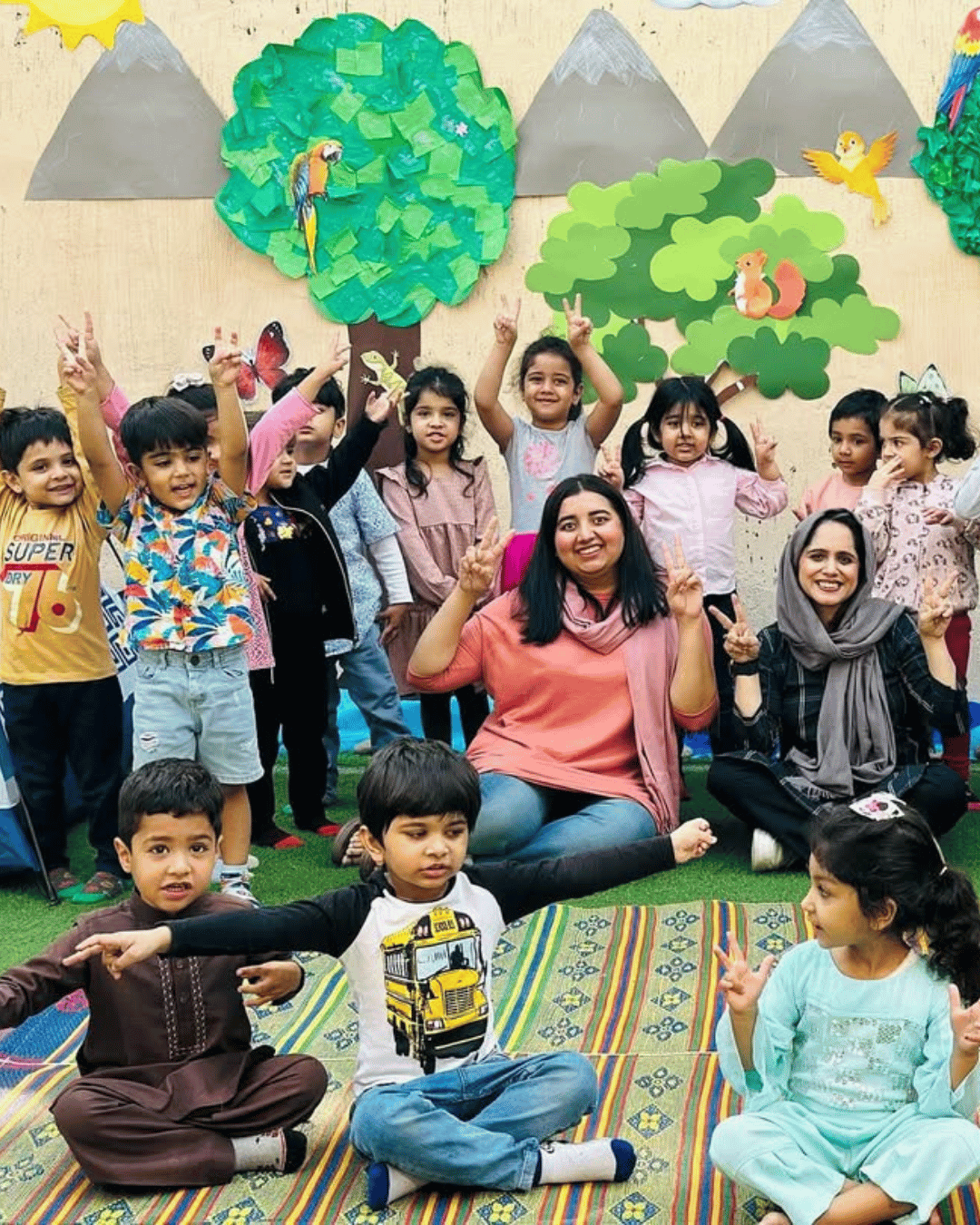
In Pre-School, children are introduced to:
- Letter recognition and sounds
- Phonemic awareness
- Early vocabulary
- Listening and speaking
- Simple words and sentences
- Storytelling and picture-based discussions
During the Junior Years, these early skills develop further into:
- Reading fluency
- Reading comprehension
- Vocabulary development
- Sentence construction
- Paragraph writing
- Grammar and punctuation
- Critical thinking
- Confident speaking and expression
This gradual progression helps children understand that literacy is not simply about completing an activity. It is about using language to understand the world, communicate with others and express their own ideas.
From Decoding to Reading Fluency
One of the important stages in junior literacy development is reading fluency.
Reading fluency means reading with accuracy, appropriate pace and expression. Children gradually move away from sounding out every word individually and begin to recognise familiar words more naturally.
When reading becomes more fluent, children can focus more attention on understanding the meaning of a text.
At Schola Nova, reading fluency can be supported through activities such as:
- Guided reading
- Shared reading
- Teacher read-aloud sessions
- Reading aloud in class
- Repeated reading practice
- Storytelling and discussion
- Reading with appropriate expression
Children also learn to notice punctuation, pause at suitable points and change their tone when reading dialogue.
Reading should not feel like simply saying words from a page. It should gradually become an opportunity to understand, imagine and communicate.
Research-based guidance from Cambridge International highlights the importance of reading, writing, speaking and listening in developing effective communication skills.
Developing Vocabulary Through Reading
A child’s vocabulary plays an important role in reading comprehension and communication.
As children read stories, poetry and non-fiction texts, they encounter words and expressions that may be unfamiliar. Instead of treating unfamiliar words as a barrier, teachers can help children explore their meanings through context and discussion.
At Schola Nova, vocabulary development can be encouraged by helping children to:
- Use context clues to understand unfamiliar words
- Connect new words with familiar ideas
- Discuss the meanings of words in stories
- Use new vocabulary in conversations
- Apply new words in their writing
- Explore synonyms and descriptive language
For example, a child may initially describe a rainy day as “wet”. With a growing vocabulary, they may begin using words such as “drizzling”, “gloomy” or “pouring”.
This development allows children to describe their experiences more clearly and express increasingly detailed ideas.
Vocabulary is not limited to English lessons. It supports learning in Mathematics, Science, Social Studies and other areas of the curriculum.
Reading Comprehension: Understanding Beyond the Words
Reading the words on a page is not the same as understanding the text.
Reading comprehension helps children identify meaning, make connections, ask questions and think about what they have read.
In the Junior Years, classroom discussions can move beyond simple questions such as “What happened?” Teachers can encourage children to explore deeper questions:
- Why did the character make that decision?
- How do you think the character felt?
- What might happen next?
- What would you have done differently?
- What lesson can we learn from the story?
- Does this story remind you of something in real life?
These questions encourage children to become active readers.
They learn to make connections between:
- Text and themselves: Have I experienced something similar?
- Text and other texts: Does this remind me of another story?
- Text and the wider world: Does this happen in real life?
Through prediction, questioning, summarising and discussion, children begin to understand that reading involves thinking and interpretation.
The Cambridge Primary English curriculum also emphasises reading, writing, speaking and listening for different purposes and audiences.
From Sentences to Structured Writing
In Pre-School, writing often begins with mark-making, letter formation and simple words. During the Junior Years, children gradually learn to organise their thoughts into complete sentences and structured paragraphs.
At Schola Nova, writing activities can help children understand how written communication is developed.
Students learn to consider:
- How to begin a piece of writing
- How to organise ideas logically
- How to use descriptive language
- How to construct complete sentences
- How to apply grammar and punctuation
- How to create suitable endings
- How to review and improve their work
Writing should be more than copying sentences or memorising rules. Grammar, spelling and punctuation are important because they help children communicate their ideas clearly.
Children can also be encouraged to reread their writing, identify areas for improvement and make changes. This process introduces them to editing and helps them develop greater ownership of their work.
Different Types of Writing
Writing becomes more meaningful when children have opportunities to explore different formats.
Junior students can practise writing:
- Short stories
- Diary entries
- Descriptive paragraphs
- Factual reports
- Personal opinions
- Letters
- Character descriptions
- Creative story endings
Each writing format has a different purpose. A story may focus on imagination, while a factual report may focus on accuracy and information.
This variety helps children understand that writing is a flexible tool for communicating different messages.
Encouraging a Love of Books
Reading skills are important, but developing a genuine interest in books is equally valuable.
A child may learn to read accurately without automatically developing a habit of reading for pleasure. This is why literacy education should include opportunities for enjoyment, choice and discovery.
At Schola Nova, reading engagement can be encouraged through:
- Classroom reading corners
- Shared story sessions
- Take-home reading books
- Library activities
- Book discussions
- Reading recommendations
- Storytelling
- Reading milestone celebrations
Children should have opportunities to explore different genres, including fiction, poetry and non-fiction.
When children discover stories and subjects that interest them, reading can become a positive part of their daily lives.
Parents can support this habit by reading with their children, discussing stories and allowing them to choose age-appropriate books.
Literacy Across the Curriculum
Reading and writing are not limited to English lessons.
Children use literacy skills throughout their school day. They read instructions, interpret questions, explain observations and communicate their understanding in different subjects.
For example, Junior students may be asked to:
- Read and interpret a word problem in Mathematics
- Follow instructions during a Science activity
- Research information for a Social Studies project
- Explain their observations in writing
- Read information from charts and diagrams
- Present ideas during classroom discussions
A child may understand a mathematical concept but struggle if they cannot interpret the wording of a question. This demonstrates why reading comprehension supports learning across the curriculum.
Strong literacy skills help children access information, participate in discussions and communicate their understanding more effectively.
Developing Critical Thinkers Through Discussion
Reading and thinking are closely connected.
In the Junior Years, classroom discussion gives children opportunities to ask questions, share opinions and listen to different perspectives.
Teachers can encourage children to explain their ideas using reasons and examples from the text.
For example, a discussion about a character’s decision may lead to questions about:
- Fairness
- Honesty
- Responsibility
- Kindness
- Courage
- Problem-solving
These conversations support comprehension while also encouraging reasoning and empathy.
Children gradually learn that they do not need to agree with every opinion. They can listen respectfully, consider another viewpoint and explain their own thinking.
This is an important part of developing confident communicators and independent learners.
Creativity Through Storytelling and Imagination
Literacy also provides opportunities for creativity.
Children can use stories as inspiration for role-play, drama, creative writing and imaginative activities.
At Schola Nova, literacy activities may encourage children to explore questions such as:
- What could happen next?
- How could the story end differently?
- Can you create a new character?
- What would the story look like from another person’s perspective?
- Can you retell the story in your own words?
When children create their own endings or retell stories from a different viewpoint, they practise imagination, sequencing and expression.
These activities help children understand that reading is not only about receiving information. It can also inspire them to create, communicate and explore new possibilities.
The Role of Teachers in Literacy Development
Teachers play an important role in helping children become confident readers and writers.
During the Junior Years, children need opportunities to practise, make mistakes, receive feedback and try again. A supportive classroom environment can help them participate without feeling afraid of getting an answer wrong.
Teachers support literacy development by:
- Observing each child’s progress
- Providing age-appropriate reading opportunities
- Encouraging children to ask questions
- Supporting vocabulary development
- Giving constructive feedback
- Recognising effort and improvement
- Providing additional practice where needed
- Encouraging children to express their ideas
Every child develops at a different pace. Some children may enjoy creative writing, while others may feel more confident during storytelling or group reading.
Understanding individual strengths and learning needs helps teachers provide appropriate encouragement and support.
A Structured Curriculum That Grows with Every Child
Effective literacy development requires progression.
Each new skill should build on previously learned knowledge. Children need opportunities to review, practise and apply their learning in different situations.
At Schola Nova, a progressive approach to learning can support children as they develop:
- Phonics and word recognition
- Reading accuracy
- Fluency
- Comprehension
- Vocabulary
- Sentence construction
- Writing organisation
- Independent expression
Teachers can use classroom observations, reading activities and written work to understand each child’s progress.
The purpose of monitoring is not simply to identify weaknesses. It is to recognise what a child can already do and determine which skills they should develop next.
Children who need additional practice can receive appropriate support, while those ready for greater challenge can explore more advanced reading and writing activities.
Parents as Partners in Reading and Writing
Literacy development continues beyond the classroom.
Everyday activities at home can provide valuable opportunities for children to practise reading, speaking and writing.
Parents can support their child by:
- Reading together regularly
- Asking children to retell a story
- Discussing new vocabulary
- Encouraging children to describe their day
- Visiting a library or bookshop
- Allowing children to choose suitable books
- Asking open-ended questions
- Celebrating effort rather than only correct answers
Simple questions such as “What was your favourite part of the story?” or “What do you think will happen next?” can encourage children to think and communicate.
A consistent partnership between school and home helps children experience literacy as a meaningful part of everyday life.
Preparing Children for the Next Stage of Learning
The purpose of the Junior Years is not limited to preparing children for the next grade or examination.
It is about developing the skills and confidence they will need throughout their education.
A child who becomes a fluent reader, thoughtful learner and confident writer is better prepared to engage with more complex texts, communicate ideas and take greater responsibility for their learning.
These skills will support children as they progress through Schola Nova’s academic programmes, including Primary, Secondary and Cambridge IGCSE education.
Our Commitment: From Sounds to Confident Expression
The literacy journey begins with small steps: recognising sounds, learning letters and blending words.
Over time, these skills develop into reading fluency, comprehension, vocabulary, writing and confident expression.
At Schola Nova School, we aim to support children as they progress from early literacy foundations towards becoming thoughtful readers, curious thinkers and confident communicators.
Our goal is not simply to help children read words. We want them to understand ideas, ask meaningful questions, express themselves clearly and develop a lifelong interest in learning.
Because at Schola Nova, we do not just want our children to learn to read. In keeping with our vision to “Learn to Lead”, we want them to develop the confidence to lead their own learning.
Frequently Asked Questions
1. What is junior literacy development?
Junior literacy development is the process through which children build reading, writing, speaking, listening, vocabulary and comprehension skills during their primary school years.
2. Why is reading fluency important for children?
Reading fluency helps children read accurately and smoothly. This allows them to focus more on understanding the meaning of the text instead of concentrating on every individual word.
3. How does phonics support early reading?
Phonics helps children understand the relationship between letters and sounds. It supports word recognition, decoding and the development of early reading skills.
4. How can parents improve their child’s reading skills at home?
Parents can read regularly with their children, discuss stories, encourage retelling, explain unfamiliar words and provide opportunities for independent reading.
5. Why is reading comprehension important?
Reading comprehension helps children understand information, make connections, interpret meaning, ask questions and think critically about what they read.
6. How does writing support a child’s development?
Writing helps children organise their thoughts, communicate ideas, develop creativity and practise grammar, spelling and punctuation.
7. How does Schola Nova support literacy learning?
Schola Nova supports literacy through progressive learning, early phonics foundations, reading practice, comprehension activities, writing opportunities, classroom discussions and teacher guidance.
Parents can explore the school’s Primary School programme to learn more about the academic journey.
8. How can parents learn more about Schola Nova School?
Parents can explore the official Schola Nova website or visit the school’s How to Apply page for information about admissions.
Begin Your Child’s Learning Journey at Schola Nova
At Schola Nova School in F-8, Islamabad, we believe that strong educational foundations help children grow with confidence.
From early phonics and reading to writing, discussion and independent thinking, each stage of learning contributes to a child’s future development.
Discover how Schola Nova supports children as they learn, explore and grow.
Visit our website to learn more about our academic programmes and admissions process.