
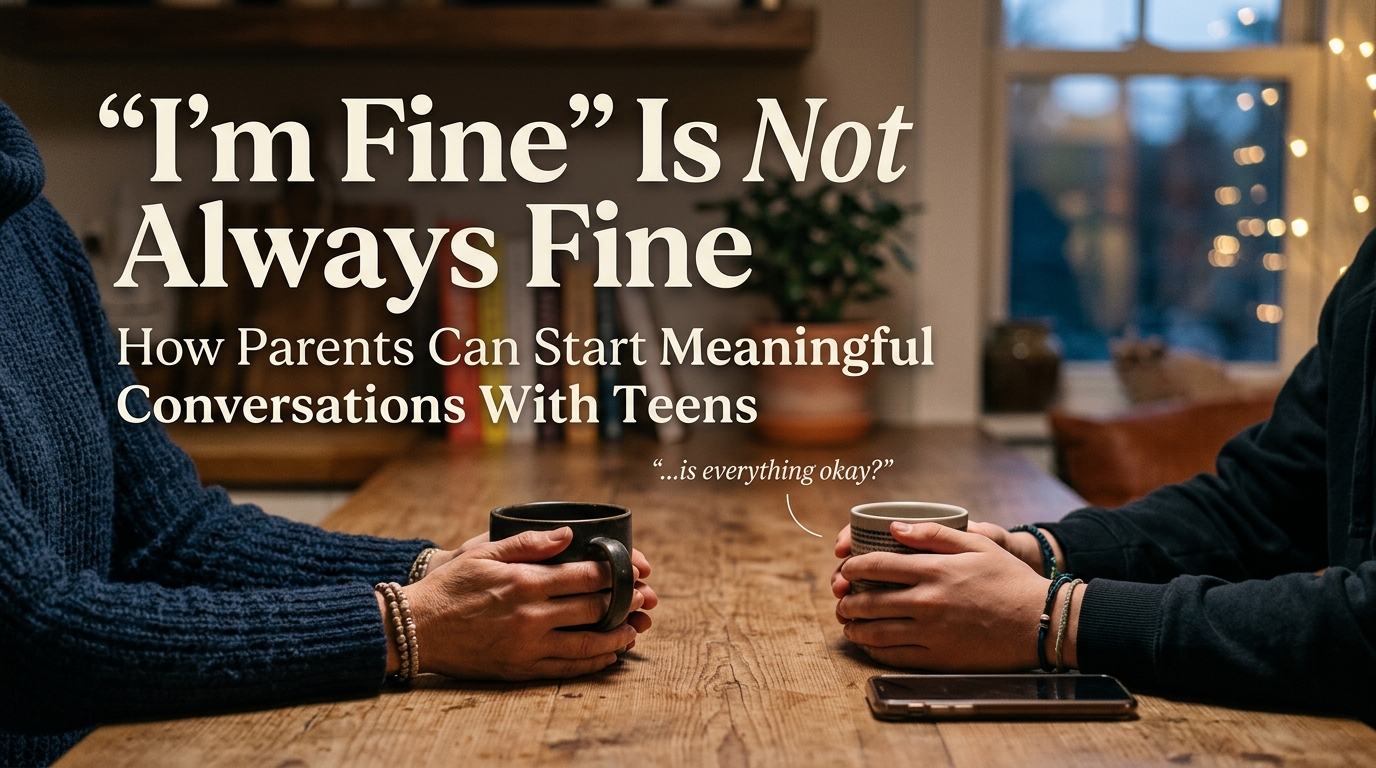
“I’m Fine” Is Not Always Fine: How Parents Can Start Meaningful Conversations With Teens
“I’m fine.”
It is a simple answer that many parents hear when they ask their teenager how the day went. Sometimes, it means exactly what it says. At other times, it may mean “I don’t know how to explain it”, “I’m not ready to talk” or “I’m worried you might not understand.”
The teenage years bring changes in friendships, school responsibilities, personal identity and independence. Young people may experience emotions they find difficult to describe, even when they have a loving family ready to support them.
For parents, the challenge is not always knowing what to say. It is creating an environment where teenagers feel safe enough to say what they really mean.
At Schola Nova, we believe education extends beyond academic achievement. A supportive learning environment should also recognise the importance of emotional wellbeing, respectful communication and positive relationships between children and the adults who guide them.
For families exploring the best school in Islamabad, it is worth considering how a school supports not only a child’s academic progress, but also their confidence, wellbeing and ability to communicate.
Why Teenagers Do Not Always Share What They Feel
Teenagers are learning to understand their emotions, manage greater responsibilities and develop their own identities. They may want independence while still needing reassurance and guidance from adults.
Several reasons can make it difficult for them to open up.
1. They May Not Have the Right Words
A teenager may feel overwhelmed, embarrassed, disappointed or anxious without knowing exactly why. Saying “I’m fine” can be easier than trying to explain a complicated feeling.
Instead of demanding an explanation, give them time to understand what they are experiencing.
2. They May Fear Being Judged
Teenagers can worry that sharing a mistake, friendship problem or personal concern will lead to criticism, punishment or an immediate lecture.
If every difficult conversation becomes an opportunity to correct their behaviour, they may become less willing to share what is happening.
3. They Want to Feel Independent
As children grow, they often want more control over their decisions and personal lives. They may not want parents to solve every problem or ask detailed questions about every experience.
Respecting their growing independence does not mean becoming distant. It means finding a balance between offering guidance and allowing them to express themselves.
4. They May Need Time Before Talking
Some teenagers are comfortable discussing their feelings immediately, while others need time to process an experience.
A child who does not want to talk at the dinner table may be more comfortable opening up during a walk, a car journey or a relaxed conversation at home.
The important thing is to keep the door open without making them feel pressured.
UNICEF offers further advice in its guide to helping teenagers open up.
8 Ways Parents Can Start Meaningful Conversations With Teenagers
1. Ask Questions That Invite More Than a Yes or No
“Are you okay?” is a natural way to begin, but it may not always encourage a detailed response.
Try asking more specific, open-ended questions that help your teenager reflect on their experiences.
For example:
- What was the best part of your day?
- Was anything particularly difficult today?
- How are things going with your friends?
- What has been on your mind lately?
- Is there anything you wish had gone differently today?
You do not need to ask every question at once. Choose one that feels natural and give your teenager time to respond.
The aim is to understand their experience, not to conduct an interview.
2. Listen Before Offering Advice
When a teenager shares a problem, a parent’s first instinct may be to offer a solution. While advice can be helpful, sometimes young people simply want to feel heard.
Try listening without interrupting, correcting every detail or immediately explaining what they should have done.
You might respond with:
“That sounds like a difficult day.”
“I can understand why that upset you.”
“Thank you for telling me.”
These responses acknowledge their feelings without suggesting that you must agree with every decision they made.
UNICEF’s guidance on talking to children about mental health recommends listening carefully, responding thoughtfully and reminding children that their parents are on their side.
3. Choose the Right Time and Place
A serious conversation may not go well when your teenager is rushing to school, concentrating on homework or already feeling upset.
Look for everyday opportunities to connect, such as:
- Preparing a meal together.
- Going for a walk.
- Travelling together in the car.
- Taking a break after school.
- Spending a few quiet minutes before bedtime.
These moments can make conversations feel less formal and intimidating.
You do not need to schedule a serious discussion every day. Consistent, low-pressure opportunities to talk can make it easier for teenagers to approach you when something important happens.
4. Avoid Turning Every Conversation Into a Lecture
Teenagers may become defensive if they expect every discussion to end with criticism or a list of instructions.
If your child tells you about a disagreement with a friend, resist the urge to immediately decide who was right or wrong.
Instead, ask:
“How did that make you feel?”
“What do you think happened?”
“What would you like to do next?”
These questions encourage reflection and help teenagers develop their own problem-solving skills.
You can still establish boundaries and discuss consequences when necessary. The difference is that the conversation begins with understanding rather than judgement.
5. Acknowledge Their Feelings, Even When You See Things Differently
A situation that seems minor to an adult may feel extremely important to a teenager.
A disagreement with a friend, a disappointing test result or feeling excluded from a group can affect a young person’s confidence and sense of belonging.
Avoid dismissive responses such as “It’s nothing”, “You’re overreacting” or “You’ll forget about it tomorrow”.
Instead, acknowledge their experience: “I can see this matters to you. Would you like to tell me more?”
Recognising feelings does not mean agreeing with every interpretation of an event. It simply shows that you take your child’s experience seriously.
6. Respect Their Privacy While Keeping Them Safe
Teenagers need appropriate privacy as they become more independent. Constant questioning or monitoring every interaction can make them feel that they are not trusted.
Build trust by respecting reasonable boundaries and being clear about when you may need to become involved.
For example, explain that you will listen without unnecessary judgement, but that you must seek help if you believe they are at risk of harm.
This balance helps teenagers understand that privacy matters while safety remains a priority.
7. Share Your Own Feelings in an Age-Appropriate Way
Parents do not need to appear perfect or unaffected by challenges.
When appropriate, you can explain how you manage disappointment, uncertainty or stress. This shows teenagers that difficult emotions are a normal part of life and that people can learn healthy ways to respond.
For example, you might say, “I felt frustrated today, so I took a little time to calm down before dealing with the problem.”
Avoid placing adult responsibilities on your teenager or expecting them to provide emotional support for you. The purpose is to model healthy communication, not to make them responsible for your feelings.
8. Keep Showing Up, Even When They Do Not Talk
Not every attempt at conversation will lead to a meaningful discussion. Your teenager may say very little, change the subject or ask to talk later.
Try not to interpret every quiet response as rejection.
You can say, “That’s okay. I’m here whenever you’re ready.”
Then continue building your relationship through ordinary moments, shared activities and positive conversations that are not focused on problems.
Trust often grows through consistency. Teenagers need to know that support will still be available when they are ready to ask for it.
What to Say When Your Teenager Says “I’m Fine”
You do not need a perfect response. A calm, caring question can be enough to begin.
Here are some practical alternatives parents can use.
Instead of: “What’s wrong with you?”
Try: “You seem a little quieter than usual. Is there anything you’d like to talk about?”
Instead of: “You never tell me anything.”
Try: “I want you to know that you can talk to me when you’re ready.”
Instead of: “You shouldn’t feel that way.”
Try: “I may not see the situation exactly as you do, but I want to understand how it feels to you.”
Instead of: “Just tell me what happened.”
Try: “Would it help to talk about it, or would you prefer a little time first?”
Instead of: “Here’s what you need to do.”
Try: “Would you like me to listen, help you think through a solution or give you some advice?”
These small changes can help conversations feel more supportive and less confrontational.
Recognising When Your Teenager May Need Extra Support
Mood changes and a desire for independence can be part of adolescence. However, significant or persistent changes in behaviour deserve attention.
Parents may want to check in more carefully if they notice that their teenager:
- Seems unusually withdrawn or isolated.
- Loses interest in activities they previously enjoyed.
- Experiences persistent sadness, anxiety or irritability.
- Has ongoing difficulties with sleep or everyday routines.
- Shows a marked change in school engagement or relationships.
- Expresses hopelessness or talks about hurting themselves.
One sign alone does not establish that a young person has a mental health condition. What matters is the overall pattern, how long changes last and whether they interfere with everyday life.
If concerns persist or affect your teenager’s daily functioning, seek guidance from a qualified healthcare professional or psychologist. If your child talks about suicide, self-harm or immediate danger, take it seriously and seek urgent professional help.
UNICEF explains when teenagers may need additional mental health support, including changes in mood, behaviour and interest in usual activities.
The Role of Schools in Supporting Teenagers
Children spend a significant part of their lives in school. Their experiences with teachers, classmates and the wider school community can influence how comfortable they feel expressing their ideas and seeking help.
A supportive school environment can encourage students to:
- Communicate respectfully with peers and adults.
- Build positive relationships and a sense of belonging.
- Develop confidence in expressing their thoughts.
- Recognise when they need support.
- Practise empathy, cooperation and responsible decision-making.
Parents and schools play complementary roles. Families provide a foundation of care and trust at home, while schools can reinforce respectful communication and provide appropriate routes for students to seek help.
For parents researching a school in Islamabad, it is useful to ask how the school approaches student wellbeing, communication between families and teachers, and support for students who may be experiencing difficulties.
When comparing options for the best school in Islamabad, look beyond academic results alone. Consider whether the learning environment encourages students to ask questions, share concerns and develop confidence alongside their academic skills.
How Schola Nova Values the Whole Student
At Schola Nova, we believe education should help children grow academically, socially and personally. A student-centred learning environment recognises that children need opportunities to develop confidence, communicate their ideas and build positive relationships.
Supporting students means recognising that each child has their own experiences, strengths and challenges. Open communication between students, families and educators can help create an environment where young people feel respected and encouraged to learn.
Parents can learn more about Schola Nova and our educational approach, or visit the Schola Nova website to explore our school community.
Frequently Asked Questions
How can I get my teenager to open up?
Choose a relaxed moment, ask open-ended questions and listen without immediately judging or offering solutions. If your teenager is not ready to talk, reassure them that you are available whenever they feel comfortable.
Why does my teenager always say “I’m fine”?
Sometimes they genuinely feel fine. In other situations, they may be unsure how to describe their emotions, need privacy or worry about how you will react. Avoid making assumptions and give them opportunities to talk without pressure.
What should I avoid saying when my teenager is upset?
Avoid dismissing their feelings, comparing them with other children, interrupting or turning every discussion into a lecture. Try acknowledging their experience and asking what kind of support would help.
How can parents support teenage mental health?
Build a trusting relationship, maintain open communication, encourage healthy routines and take persistent changes in behaviour seriously. Seek professional guidance when concerns affect your teenager’s wellbeing or everyday life.
When should I seek professional help for my teenager?
Consider professional support when emotional or behavioural changes persist, interfere with daily functioning or cause significant concern. Any talk of suicide or self-harm should be taken seriously and requires urgent assessment and appropriate support.
What should parents look for in the best school in Islamabad?
Consider academic quality, student wellbeing, teacher communication, safeguarding, learning support and opportunities for personal development. The right school should suit your child’s individual needs and help them grow in a supportive environment.
Sometimes, Listening Is the Most Important Thing You Can Do
You do not have to solve every problem your teenager faces. Sometimes, the most meaningful thing you can offer is your time, patience and willingness to listen.
A simple “I’m here for you” can make it easier for a young person to return when they are ready to talk. Over time, small conversations can build the trust that helps teenagers share both their successes and their struggles.
At Schola Nova, we believe every child deserves to feel encouraged to learn, express themselves and grow with confidence.
Because education is not only about preparing students for examinations. It is also about helping them become thoughtful, resilient and compassionate individuals.
Schola Nova — Learn to Lead.
