Remembering the Quaid: Why September 11th Must Never Be Just Another Date

 There is a particular quietness to Quaid-e-Azam’s death anniversary on September 11th in Pakistan — quieter, certainly, than August 14th, with its flags and festivity. A newspaper headline. A moment of silence on the evening news. Perhaps a school assembly speech, read out by a student who has memorised the words without quite feeling their weight.

And then the day ends.

At Schola Nova, we believe it should mean more than that.

Quaid-e-Azam’s death anniversary is an opportunity for students to pause, reflect, and understand the sacrifices, principles, and responsibilities connected to the founding of Pakistan. It is not simply another date on the academic calendar. It is a chance to ask what Muhammad Ali Jinnah stood for — and what those principles mean to young people growing up in Pakistan today.

It is easy, in the rush of a school term, for a death anniversary to become simply another date circled on an academic calendar — alongside a mid-term test or a sports day. But some dates carry more than logistics.

September 11, 1948 marks the death of Pakistan’s founder, Muhammad Ali Jinnah, little more than a year after the country came into being. By then, Jinnah was seriously ill and physically exhausted after years of political struggle and the enormous responsibility of establishing a new state.

His final years remind us that the creation of Pakistan came at an extraordinary human cost.

That sacrifice should not be reduced to a paragraph in a textbook.

It should be understood.

It should be discussed.

And most importantly, it should encourage the next generation to think about what it means to become a responsible citizen.

More Than a Holiday: Why Quaid-e-Azam’s Death Anniversary Belongs in the Classroom

Ask a Grade 9 student who Muhammad Ali Jinnah was, and you will probably receive a textbook answer: founder of Pakistan, first Governor-General, and a central figure in the country’s history.

But ask what he sacrificed, what principles he promoted, or what responsibilities he believed citizens should have, and the answer may be less certain.

This is not a failure of our children.

It is often a failure of how history has been taught.

When history becomes a subject that students memorise for an examination, important people can become little more than names, dates, and quotations. Students may remember when something happened without understanding why it happened or why it still matters.

That is why Quaid-e-Azam’s death anniversary deserves meaningful space in education.

Students should have opportunities to explore Jinnah’s speeches, examine historical sources, participate in discussions, and consider how the principles associated with Pakistan’s founding connect to their own lives.

Real remembrance is active, not decorative.

It can take the form of a debate motion, an essay, a classroom discussion, a history project, or a thoughtful conversation that continues beyond the lesson.

At Schola Nova, we aim to approach important national occasions in this way. From primary students taking their first steps into Pakistan’s history to Senior IGCSE students studying history and society with greater academic depth, occasions such as September 11th can become extensions of learning rather than interruptions to it.

History, when taught well, is never simply about the past.

It helps students understand the present.

Understanding Jinnah Beyond the Textbook

Muhammad Ali Jinnah is often presented through a collection of familiar labels: Quaid-e-Azam, founder of Pakistan, lawyer, political leader, and first Governor-General.

These descriptions are important, but they do not tell the whole story.

Students can gain a deeper understanding when they encounter the historical figure through his own words and through the events surrounding the creation of Pakistan.

Jinnah’s speeches and statements provide opportunities for students to explore themes such as constitutional government, citizenship, responsibility, equality, tolerance, and the rule of law.

One particularly important example is his August 11, 1947 address to Pakistan’s Constituent Assembly, which is frequently discussed in connection with religious freedom and citizenship.

Rather than simply giving students a summary of the speech, teachers can allow them to examine selected passages themselves.

What was Jinnah saying?

Why was he saying it at that particular moment?

How might people living in 1947 have understood those words?

And what questions do those words raise for citizens today?

These questions transform history from memorisation into inquiry.

They also help students develop skills that extend far beyond Pakistan Studies: reading carefully, evaluating evidence, forming arguments, listening to different perspectives, and communicating ideas clearly.

A Generation Looking Outward — Without Losing Its Roots

Today’s young people are growing up in an increasingly connected world.

They can study international curricula, communicate with people across continents, access global information instantly, and imagine careers in almost any country.

This global outlook is valuable.

But being globally minded does not have to mean becoming disconnected from one’s roots.

A strong education should give students both.

Students should be encouraged to understand Pakistan honestly — its achievements, challenges, history, diversity, and aspirations — while also developing the confidence to participate in the wider world.

This is where the legacy of Jinnah can become particularly meaningful.

Learning about Pakistan’s founding does not require schools to manufacture blind patriotism. In fact, genuine education should leave room for questions and disagreement.

Students may have concerns about the economy, governance, education, social inequality, or the country’s future.

They should be allowed to express those concerns.

The role of education is not to silence frustration.

It is to help students turn frustration into informed thinking and constructive citizenship.

A student who understands the country’s history can question its present more thoughtfully because they have a clearer understanding of how that present came to exist.

Roots do not require a person to stay in one place forever.

A Pakistani student may eventually study or work abroad. That is a personal decision, and schools should not measure success by whether graduates remain in the country.

What matters is that students make such decisions with knowledge, confidence, and a meaningful understanding of where they come from.

What Schools Can Do Beyond the Assembly Speech

Keeping Quaid-e-Azam’s death anniversary meaningful requires more than a five-minute assembly speech each September.

Schools can build remembrance into learning throughout the year.

1. Integrate History Across Subjects

Jinnah’s legacy can become part of English literature discussions, debate sessions, public speaking activities, civics lessons, creative writing, and research projects.

When students encounter historical ideas in different contexts, they are more likely to understand them rather than simply memorise them.

2. Use Primary Sources

Students should have opportunities to read selected excerpts from Jinnah’s actual speeches and statements.

There is a significant difference between reading what a textbook says a historical figure believed and reading that person’s own words.

Primary sources also encourage students to ask better questions.

Who was the audience?

What was happening politically?

What did the speaker want to achieve?

How might the same words be interpreted differently today?

These are valuable historical-thinking skills.

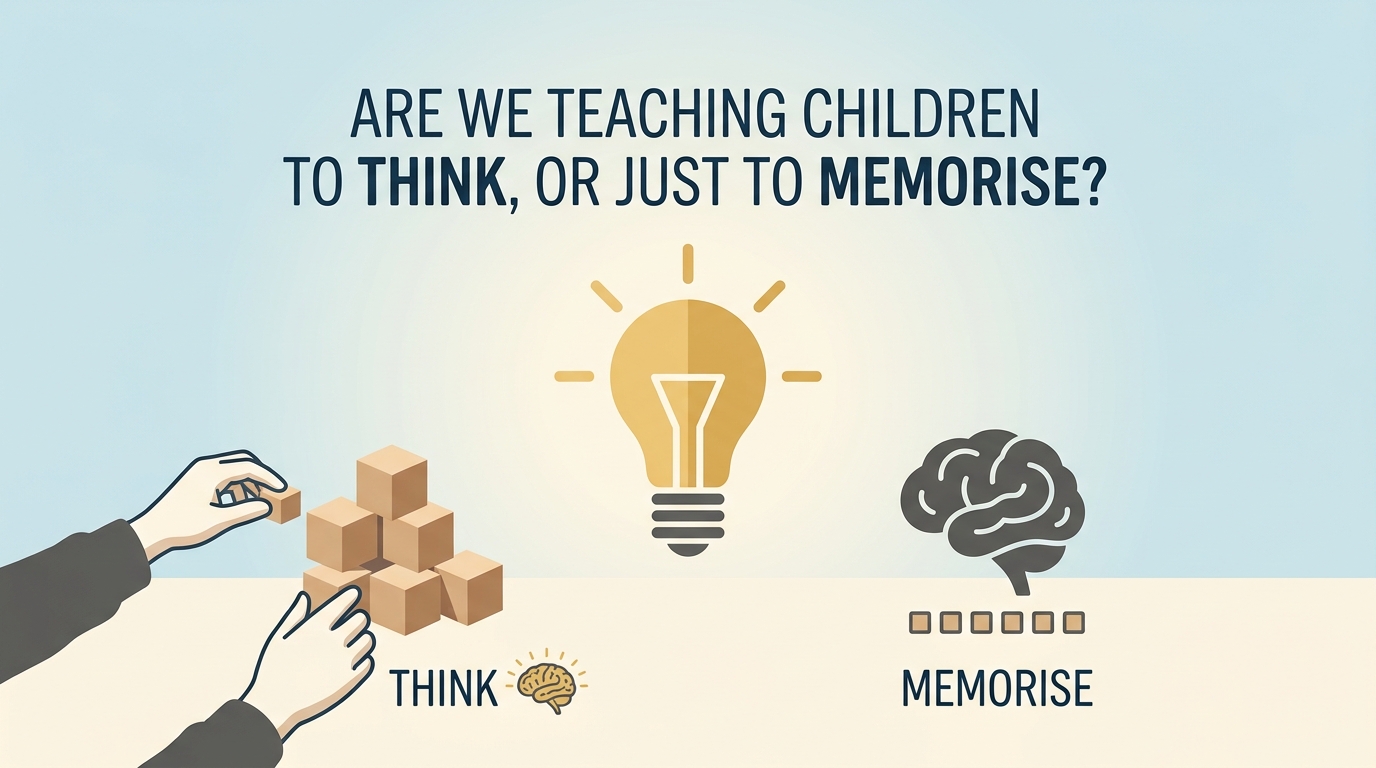
3. Replace Rote Learning With Reflection

Instead of asking only, “When did Pakistan come into being?” teachers can ask:

  • What challenges did Pakistan face at its beginning?
  • What responsibilities come with citizenship?
  • Which principles associated with Jinnah remain relevant today?
  • How should young people contribute to their communities?
  • What can we learn from the sacrifices involved in Pakistan’s creation?

Questions like these encourage students to think rather than simply recall.

4. Encourage Debate and Public Speaking

Debate provides students with a structured environment in which they can develop and defend ideas.

For example, a classroom discussion could explore:

“How should young Pakistanis contribute to the country’s future?”

Students can research different perspectives, build arguments, listen to opposing views, and present their conclusions.

This approach connects historical learning with practical communication skills.

5. Connect History to Local Communities

Students can investigate the history of their own city or family.

They might research what Islamabad, Rawalpindi, Lahore, Karachi, or another Pakistani city looked like during different periods of the country’s development.

Older family members can also provide personal memories and stories.

A conversation with a grandparent about family experiences can sometimes make history feel more real than several textbook pages.

6. Allow Honest Conversations

Perhaps the most important step is giving students permission to ask difficult questions.

Young people should be able to discuss the difference between the ideals associated with Pakistan’s founding and the realities they observe today.

Teachers can acknowledge those concerns while encouraging students to examine evidence, consider multiple perspectives, and think about constructive solutions.

A teacher who listens to a student’s frustration can turn that moment into an opportunity for civic learning.

How Quaid-e-Azam’s Legacy Can Be Taught at Different Ages

Children do not all understand history in the same way.

That is why meaningful learning about Quaid-e-Azam’s death anniversary should develop gradually with age.

Early Years: Building the First Connections

In preschool and early primary years, children can be introduced to national history through age-appropriate stories, pictures, classroom activities, and simple conversations.

At this stage, the goal is not to overwhelm children with political history.

It is to introduce the idea that important people and events shaped the country they live in.

Under the spirit of “Play. Laugh. Learn,” young learners can begin developing curiosity about their surroundings and their identity.

Primary School: Learning Through Questions

As students grow, project-based learning can help them explore questions about Pakistan’s history.

Instead of simply memorising a date, students might create a timeline, research a historical photograph, prepare a short presentation, or investigate an important speech.

The goal is to encourage curiosity.

Secondary School: Analysis and Discussion

By secondary school, students are ready for more complex questions.

They can analyse primary sources, compare historical perspectives, participate in debates, and discuss the relationship between founding ideals and contemporary society.

Under the spirit of “Challenge. Evolve. Excel,” students can be encouraged to develop independent opinions while learning to support those opinions with evidence.

This is where history becomes much more than examination preparation.

It becomes preparation for thoughtful citizenship.

Why Debate and Public Speaking Matter

A meaningful discussion about Jinnah’s legacy requires more than knowing historical facts.

Students need the confidence to express an opinion.

They need to listen.

They need to question.

They need to disagree respectfully.

And they need to support their arguments with evidence.

This is why debate and public speaking programmes can play an important role in a well-rounded education.

When students debate an issue related to Pakistan’s history or future, they are developing skills that will remain useful long after their school years.

The same ability to construct an argument can later be used in university seminars, professional meetings, presentations, interviews, and leadership roles.

At Schola Nova, we see communication as an important part of preparing students to Learn to Lead.

Global Citizenship and National Identity Can Coexist

There is no contradiction between being globally prepared and understanding one’s national identity.

In fact, the two can strengthen each other.

A student who understands Pakistan’s history can represent the country more thoughtfully in an international environment.

A student who understands different cultures can also appreciate their own culture with greater maturity.

Global citizenship should not mean abandoning local identity.

It should mean becoming capable of engaging respectfully with people, ideas, and cultures beyond one’s immediate environment.

That balance matters in an increasingly connected world.

Why This Matters When Choosing a School

Parents searching for the best school in Islamabad understandably look for academic excellence.

They may consider Cambridge IGCSE results, university pathways, qualified teachers, modern facilities, extracurricular opportunities, technology, and the transition from Pre-Nursery through Senior IGCSE.

All of these factors matter.

But education is about more than academic performance.

A school also contributes to how children learn to communicate, think independently, work with others, understand their communities, and respond to the world around them.

At Schola Nova, we have sought since 1998 to bring these dimensions together in F-8, Islamabad.

Our approach aims to combine academic excellence with character, communication, creativity, and a sense of responsibility.

We want students to be prepared for universities and careers around the world while remaining connected to the history and communities that shaped them.

That is part of what “Educating with Heart, Leading with Vision” means to us.

It means caring about what students achieve while also caring about the kind of people they become.

Remembering the Quaid Through Action

Muhammad Ali Jinnah should not be remembered only through portraits, speeches, or annual ceremonies.

His legacy becomes more meaningful when students are encouraged to think about responsibility, integrity, citizenship, and the future of their country.

That is why Quaid-e-Azam’s death anniversary can be an important educational opportunity.

On September 11th, students can do more than observe a moment of silence.

They can read a passage from one of Jinnah’s speeches.

They can discuss a historical question.

They can research their family’s history.

They can debate an issue concerning citizenship.

They can ask a teacher or grandparent what Pakistan means to them.

Small activities can create meaningful connections when they are part of a larger culture of learning.

A Community That Takes Remembrance Seriously

A school’s responsibility does not end with examination results.

Education is also about helping young people understand who they are, where they come from, and what responsibilities come with being part of a community.

At Schola Nova, we believe that strong academic preparation and meaningful personal development should exist together.

Our students should be able to pursue ambitious futures while carrying with them an informed understanding of their history.

They should be able to question Pakistan’s challenges without losing sight of its story.

They should be able to engage with the wider world without becoming disconnected from their roots.

And they should be able to remember the people who shaped their country not because a calendar tells them to, but because they understand why that history matters.

This September 11th, we hope our students — and students across Pakistan — spend a few minutes doing more than observing a moment of silence.

Read something the Quaid actually said.

Ask a question.

Start a conversation.

Listen to an older generation.

Think about the kind of citizen you want to become.

Because Quaid-e-Azam’s death anniversary should never be just another date.

It should be an opportunity to remember the sacrifice behind Pakistan’s creation, understand the principles that shaped its early years, and consider what responsibility the next generation carries into the future.

Muhammad Ali Jinnah’s legacy belongs not only in history books.

It belongs in thoughtful classrooms, meaningful conversations, responsible citizenship, and the choices young Pakistanis make every day.

At Schola Nova, we believe that is what Learn to Lead truly means.

Schola Nova — Educating with Heart, Leading with Vision.

Back to School 2026: Helping Your Child Begin the New Academic Year with Confidence

Back to School 2026: Preparing Your Child for a Fresh Start

There is something rather special about the days just before Back to School 2026 begins.

Uniforms are being checked, school bags are being opened and reorganized, new books are waiting to be written in, and timetables are slowly becoming part of everyday conversations again. There is excitement in the air, but perhaps a little reluctance too. The holidays have been long, mornings have been slower, bedtimes have stretched, and suddenly it is almost time to return to the familiar rhythm of school.

As we approach school reopening 2026, it is easy to think that preparing for the new academic year simply means buying stationery, getting uniforms ready and making sure everything is packed for the first day. But preparing a child for the new academic year is about much more than getting the practical things in order.

It is about preparing the child.

Preparing them emotionally for change. Preparing them mentally for new challenges. Preparing them to take on a little more responsibility. Preparing them to make mistakes, ask questions, try again and discover something new about themselves.

At Schola Nova, we have always believed that education extends far beyond what happens between the first bell and the last lesson. School is where children learn mathematics, languages, sciences and countless other subjects, but it is also where they discover friendships, develop confidence, learn to communicate, experience disappointment, solve problems and slowly begin to understand who they are.

That is why the return to school is more than simply a return to classrooms and textbooks. It is another opportunity for a child to begin again.

And a beginning does not need to be perfect.

It simply needs to feel possible.

A New Academic Year, A Fresh Beginning

Every child returns to school carrying something different from the previous year. Perhaps they have grown more confident. Perhaps they have discovered a subject they genuinely love. Perhaps they struggled with something and are still finding their way. Maybe they have made a new friend, discovered a new interest, overcome a fear or simply grown into a slightly different version of themselves.

A new academic year gives children an opportunity to start afresh.

Back to School 2026 can be a chance to develop better study habits, become more organised, participate more actively in class, make new friendships or simply approach learning with greater curiosity. For some children, the goal may be academic. For another, it may be social. For another, it may simply be learning to pack their own school bag every morning.

As parents, we sometimes feel the need to make everything happen at once. We want our children to sleep on time, study regularly, perform well, become organised, participate in activities and return to school completely confident from day one.

But children do not need perfection from us.

They need consistency, encouragement and reassurance.

The goal of preparing for Back to School 2026 is not to make sure your child has everything figured out before the first day. It is to help them walk into that first morning with enough confidence to say, “I can do this.”

Getting Ready for Back to School 2026: Returning to a School Routine

Perhaps one of the biggest adjustments after a long holiday is something wonderfully ordinary: waking up.

During the holidays, bedtime often becomes later, mornings become slower and the usual routine takes a little break. Suddenly expecting a child to sleep early and wake up at school time on the first morning can make the transition unnecessarily difficult.

This is why it helps to bring the school routine back gradually.

Move bedtime a little earlier. Wake your child slightly earlier each morning. Bring meals closer to school-time schedules and begin reintroducing the small routines that will eventually make school mornings feel natural again.

Preparing for Back to School 2026 also means helping your child’s body and mind gradually return to a rhythm that feels familiar.

The objective is not discipline for discipline’s sake. It is simply helping the child’s body and mind remember a rhythm that feels familiar.

And if the first morning is still chaotic? That is perfectly alright.

The first day does not have to run like clockwork. Children need time to adjust, particularly after a long break. A routine becomes comfortable through repetition, not through one perfectly organised morning.

Back to School 2026: Talking to Your Child About Returning

Sometimes the most useful thing a parent can do to prepare a child for school is simply to talk to them.

Not a lecture. Not an interrogation. Just a conversation.

Ask them what they are looking forward to. Ask which subject they are excited about. Ask whether there is anything they are worried about. Ask what they would like to learn or achieve this year.

These conversations may seem small, but they give children an opportunity to put their feelings into words. A child who appears completely excited about returning to school may still be wondering about a new teacher, a new class, examinations, friendships or an unfamiliar academic challenge.

Not every child will say, “I am anxious about this.”

Sometimes the anxiety comes out as reluctance, irritability, forgetfulness or simply saying, “I don’t want to go.”

Instead of immediately dismissing the feeling, pause and listen.

You might simply say, “It is okay to feel nervous. Tell me what is worrying you.”

Children do not always need us to solve everything immediately. Sometimes they simply need to know that someone understands.

Emotional preparation is an important part of Back to School 2026, particularly for children who may feel nervous about returning.

And that is an important part of preparing them for school—not just preparing their bags, but preparing a space where their feelings can be heard.

Let Children Have a Say in Their Goals

The beginning of a new school year naturally makes us think about improvement. But there is a significant difference between a goal a child chooses and a target that a child feels has been imposed upon them.

Instead of immediately saying, “This year you need to get better marks,” try asking, “What would you like to get better at this year?”

Perhaps your child wants to read more books. Perhaps they want to participate more in class, improve their handwriting, become better at a particular subject or complete their homework more consistently. An older student may want to improve their writing, create a revision schedule, participate in a school activity or develop greater confidence in public speaking.

When children are involved in setting their own goals, they begin to understand that education is something they are part of—not something that simply happens to them.

This sense of ownership becomes increasingly important as children grow older.

Back to School 2026: Rebuilding Study Habits Without Losing the Joy of Learning

There is no need to turn the final days of the holidays into an intensive academic boot camp.

Children do not need hours of studying before school even begins. Instead, learning can be gently reintroduced into everyday life through reading, reviewing important concepts, organising notes or completing a small educational activity.

Once school starts, establishing a regular homework and study time can help children develop consistency. A simple routine is often far more effective than long, stressful study sessions.

As part of Back to School 2026, parents can gently reintroduce learning without turning the final days of the holidays into stressful academic sessions.

But there is another important part of this conversation: learning should remain enjoyable.

At Schola Nova, we believe that learning should not be confined to textbooks. A child can learn through a conversation, a book, a museum visit, a science experiment, a game, a painting, a recipe or simply by asking a very good question.

In fact, some of the most meaningful learning begins with curiosity.

“Why?”

“How?”

“What would happen if…?”

These questions are not distractions from learning. They are learning.

Let Children Take Ownership

Preparing for the new academic year can also be an opportunity to teach children something that will remain valuable long after they leave school: independence.

Younger children can help organise their school bags, books, notebooks, stationery, uniforms and water bottles. Older students can begin checking their own timetables, preparing what they need for the following day and keeping track of their assignments.

Parents naturally want to make things easier for their children. But children also need opportunities to discover that they are capable of doing things for themselves.

  • Ask your child to pack their own bag.
  • Let them prepare their uniform.
  • Encourage them to keep their study space tidy.
  • Ask them to check their homework.
  • Let them follow their own morning routine, with support where necessary.

These may sound like very ordinary tasks, but independence is built through ordinary tasks repeated consistently.

The goal is not to suddenly expect children to manage everything alone. It is to gradually change the kind of support we provide.

Sometimes the best thing we can do is not to do something for a child, but to stand beside them while they learn to do it themselves.

Sleep, Reading and the Small Things That Matter

A healthy school routine also begins with something that is often underestimated: sleep.

A rested child is better prepared to engage with lessons, participate in activities and manage the demands of the day. Returning to a consistent bedtime before school begins can make the first week considerably easier.

A calm bedtime routine can also help children transition from the excitement of the day into rest.

And then there is reading.

Reading is one of the simplest ways to reconnect children with learning before the school year begins. But it does not have to feel like another assignment. Let children choose books that genuinely interest them—stories, biographies, science, history, poetry or anything else that sparks their curiosity.

The purpose is not simply to complete a reading target.

It is to help children rediscover the pleasure of learning.

These small habits can make the transition into Back to School 2026 much smoother.

Learning Does Not Stop at the Classroom Door

One of the things we value deeply at Schola Nova is the idea that education is bigger than academics.

A visit to a museum can lead to a history lesson. Cooking can become mathematics and science. A trip outdoors can lead to questions about nature. A game can teach strategy and problem-solving. Art can develop imagination. A conversation can develop communication.

Children learn when they are given opportunities to explore the world around them.

That is why the final days of the holidays do not need to be filled with worksheets. Visit a library. Explore a museum. Try a simple science experiment. Cook together. Draw or paint. Explore nature. Learn something new as a family.

Let children ask questions.

Let them be curious.

Let them discover that learning is not something that only happens when someone tells them to sit down and study.

A Well-Rounded Education Goes Beyond Marks

Academic learning is important. But children also need opportunities to discover who they are beyond academics.

Sports can teach teamwork, discipline and resilience. Music creates opportunities for expression. Art encourages imagination. Drama develops confidence. Public speaking builds communication skills. Technology can open new possibilities. Leadership can teach responsibility.

Not every strength appears on a report card.

Some children shine when they are on a stage. Others when they are working with their hands. Some discover their confidence through sport. Others find their voice through writing, debate, art or music.

At Schola Nova, we believe that a well-rounded education should give students opportunities to discover these strengths both inside and outside the classroom.

Because the question is not only, “What did my child score?”

It is also:

“What did my child discover?”

“What did they become curious about?”

“Where did they find confidence?”

“What did they learn about themselves?”

Those questions matter too.

Supporting Older Students Through Greater Responsibility

For students entering secondary classes or an IGCSE programme, the beginning of a new academic year may also mean a significant increase in responsibility.

Assignments become more demanding. Deadlines matter more. Revision requires planning. Students are expected to manage a greater portion of their academic lives independently.

Parents can help by gradually shifting from doing things for their children to teaching them how to manage things themselves.

Instead of constantly reminding an older child about every assignment, ask them how they plan to organise their week.

Instead of checking every task, help them develop a system for tracking their own responsibilities.

This is particularly important for students preparing for IGCSE and eventually higher education.

For families exploring IGCSE schools in Islamabad, academic quality is naturally important. But a strong educational environment should also help students become independent thinkers, responsible learners and confident young people who can eventually manage the demands of university and professional life.

That is the kind of preparation that lasts.

Teach Children That Mistakes Are Part of Learning

Perhaps one of the most important messages we can give children as they return to school is that they do not need to be afraid of getting things wrong.

Children sometimes begin to define themselves through their mistakes.

“I am bad at mathematics.”

“I can’t write.”

“I am not good at this.”

But a mistake is not a permanent identity.

Instead of saying, “I am not good at this,” we can teach children to say, “I am still learning this.”

That small word—still—changes everything.

It leaves room for growth.

A difficult subject can become something to work on rather than something to fear. A wrong answer can become an opportunity to understand. A disappointing result can become information about what needs to change.

Children who learn that mistakes are part of learning are more likely to develop persistence and resilience.

And these qualities matter far beyond school.

The Partnership Between Home and School

Children thrive when the adults around them communicate.

Parents and schools each see different parts of a child’s world. Parents understand their child’s personality, routines and experiences at home. Teachers see how the child learns, communicates and interacts in the classroom.

When these perspectives come together, children receive more consistent support.

Stay connected with your child’s school. Keep up with announcements, important dates, academic activities and parent-teacher meetings. If your child is experiencing an academic or emotional difficulty, communicate early.

At Schola Nova, we believe that education works best when children know that the important adults in their lives are working together.

What Should Parents Avoid Before School Reopens?

Preparing for the new academic year should not become another source of unnecessary pressure.

Avoid comparing your child with other children.

Avoid turning every conversation into one about marks.

Avoid expecting your child to immediately return to a full school routine after a long break.

And most importantly, avoid allowing grades to become a measure of your child’s worth.

A mark tells us how a child performed in one assessment, on one day, in one particular area.

It does not tell us how kind they are.

It does not tell us how creative they are.

It does not tell us how resilient they are.

It does not tell us how much they have grown.

And it certainly does not tell us who they will become.

A Fresh Start at Schola Nova

There is something bittersweet about the beginning of every school year.

Another summer has passed. Children have grown, sometimes so subtly that we only notice when an old uniform no longer fits or a school bag suddenly seems smaller on their shoulders.

And then comes another first day.

Another classroom.

Another teacher.

Another collection of questions.

Another year of friendships, challenges, discoveries and memories waiting to happen.

Back to School 2026 Is More Than a Return to School

Back to School 2026 is more than a return to school. It is a fresh opportunity.

An opportunity for children to learn, grow, make memories and discover what they are capable of achieving.

For parents, perhaps the greatest gift is not preparing everything perfectly. It is being there. Encouraging without overwhelming. Listening without immediately fixing. Guiding without taking over. Expecting effort without making perfection the goal.

And reminding children that they are so much more than their marks.

At Schola Nova, we believe education should help children become confident learners, responsible individuals, creative thinkers and future leaders. We want our students to achieve academically, but we also want them to find their voices, discover their strengths, develop independence and understand that they have something unique to contribute.

So, as school reopening 2026 approaches, perhaps we can encourage our children to begin the year with something lighter than pressure.

With curiosity rather than fear.

With confidence rather than comparison.

With responsibility rather than dependence.

And with the understanding that it is perfectly alright not to know everything yet.

Because a new school year is not about having all the answers.

It is about being willing to ask the next question.

And perhaps that is where every meaningful education begins.

Welcome back, Schola Nova.

Here is to another year of learning, growing, discovering—and becoming.