Beyond “What Do You Want to Become?”: Helping Children Discover Their Future
There is a question that almost every child hears while growing up: “What do you want to become when you grow up?”
For some children, the answer comes instantly. A doctor. An engineer. A pilot. A business owner.
For others, the answer changes every few months.
A child who once wanted to become a doctor may suddenly develop an interest in technology. A student who has always loved Mathematics may discover that they are more fascinated by design, architecture or Computer Science. Someone who enjoys Biology may eventually realise that their real passion lies in psychology, research or biotechnology.
And then there are students who simply do not know.
Perhaps that is an answer we need to become more comfortable hearing.
Career planning for students should not begin with pressure to choose one profession. It should begin with exploration.
Not knowing what you want to become at thirteen, fourteen or even sixteen does not mean that a student is behind. It does not mean they lack ambition, intelligence or direction. Sometimes, it simply means that they are still discovering themselves.
For parents, this can occasionally feel worrying. There is a natural desire to see children secure, successful and moving confidently towards a promising future. However, education should not rush children into choosing a profession before they have enough opportunities to understand their interests, strengths and aspirations.
The real question, therefore, may not be “When should students choose a career?”
Perhaps it should be:
“When should students begin exploring the possibilities available to them?”
At Schola Nova, we believe that career planning for students should begin with exploration rather than pressure. Secondary school is an important time for students to start discovering what interests them, but they do not need to commit to a lifelong profession at this stage.
Instead, these years can help them understand themselves, encounter new subjects and experiences, and gradually develop the confidence needed to make informed decisions later.
Career Planning for Students Begins With Understanding the Child
Career conversations can sometimes become narrower than they need to be.
A student performs well in Biology, and suddenly everyone assumes medicine is the natural destination. Someone excels in Mathematics, and engineering becomes the obvious choice. A confident student who enjoys organising events may immediately be directed towards business.
Academic performance can certainly provide useful clues, but a career should never be chosen solely because a child happens to be good at a particular subject.
A student may achieve excellent grades in Mathematics and still have no desire to become an engineer. Another may be brilliant at Biology but feel that medicine is not the right path for them.
Grades tell us something important about academic ability. They do not tell us everything about a student’s personality, values, interests, motivation or the kind of life they may eventually wish to build.
A more meaningful approach is to understand the whole student by considering:
- Interests
- Strengths
- Personality
- Values
- Communication skills
- Problem-solving abilities
- Motivation
- Learning style
- Future opportunities
This is why the conversation needs to change.
Instead of repeatedly asking a child, “What career have you chosen?”, parents and teachers can ask:
- What subjects do you enjoy?
- What kinds of problems do you like solving?
- What are you naturally curious about?
- What kind of work do you think you would enjoy?
- What would you like to learn more about?
- Which activities make you lose track of time?
- Do you prefer working with people, ideas, technology or creative projects?
These questions do not demand that a student have all the answers.
They create space for the student to begin discovering them.
At Schola Nova, we believe that every child deserves to be seen as more than a set of grades or a future profession. Every student brings a different combination of abilities, interests, questions and dreams.
Education should not be about fitting every child into the same definition of success. It should be about helping them understand where their own strengths lie and giving them the confidence to explore where those strengths may take them.
Why Secondary School Is the Perfect Time for Career Exploration
Secondary school is often a period when students begin developing a stronger sense of identity and independence.
They encounter more specialised subjects, take on greater academic responsibility and slowly begin to recognise what genuinely interests them.
These years provide an opportunity to connect classroom learning with the world beyond school.
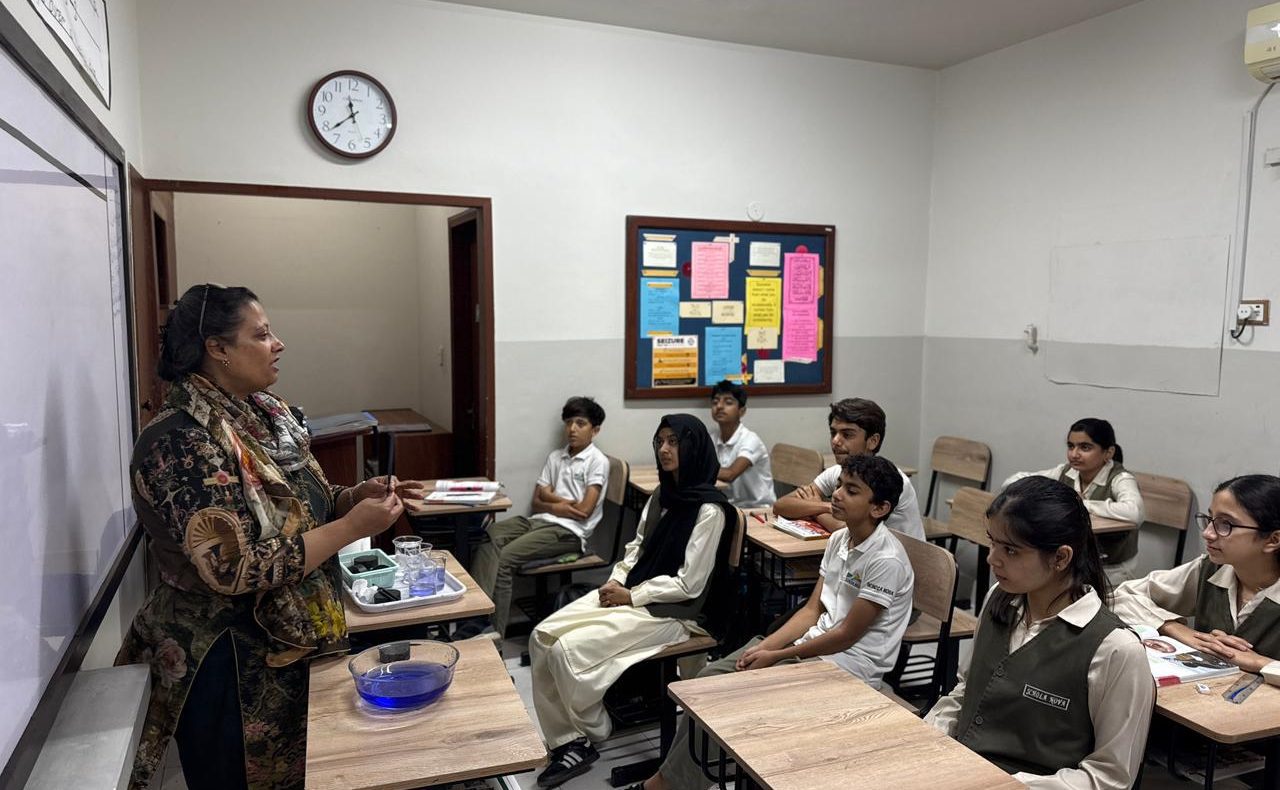
A science experiment may spark a student’s interest in research.
A technology project may introduce them to coding.
A debate may reveal a talent for communication and public speaking.
A leadership role may help a student discover confidence they did not realise they possessed.
A business activity may encourage someone to think like an entrepreneur for the first time.
Experiences such as science projects, technology activities, creative work, debates, leadership opportunities, research assignments, competitions and exposure to different professions can help students connect academic learning with the real world.
This is why secondary school should not simply be a period of preparing for examinations.
It should also be a period of discovery.
A textbook can introduce a student to a subject, but experience can help them understand whether they truly enjoy it.
Sometimes, students only discover their interests when they are given the opportunity to try something unfamiliar.
The child who appears quiet in a classroom may become an exceptional speaker on a stage.
The student who does not always achieve the highest marks may discover extraordinary creativity through a project.
Someone who enjoys taking things apart and understanding how they work may eventually find themselves drawn towards engineering or technology.
Another student may discover that their greatest strength lies not in solving equations but in understanding people.
This is why opportunities matter.
Students need enough exposure to different ideas, subjects and experiences to discover possibilities they may never have previously considered.
Medicine: More Than Being Good at Biology
Medicine remains one of the most popular career aspirations among students in Pakistan.
For many young people, the dream of becoming a doctor begins with a genuine interest in science or a desire to help others.
However, medicine requires much more than simply achieving high grades in Biology.
Students who may eventually wish to explore medicine can begin developing qualities such as:
- Scientific curiosity
- Discipline
- Communication
- Empathy
- Problem-solving
- Attention to detail
- Resilience
- Teamwork
Medical education requires sustained academic effort, while the profession itself involves working with people, families and healthcare teams.
The ability to listen, communicate clearly and approach problems thoughtfully can be just as important as academic knowledge.
However, enjoying Biology does not mean that a student must immediately decide that medicine is their only future.
Secondary school can simply become the beginning of exploration.
Does the student enjoy learning about the human body?
Are they fascinated by scientific questions?
Do they enjoy analysing complex information?
Are they comfortable working with people?
Over time, these interests may develop into a clearer direction.
Sometimes, they may lead somewhere completely different.
A student who begins with a love for Biology may eventually discover an interest in medicine, psychology, genetics, biotechnology, environmental sciences or research.
The purpose of career exploration for students is not to close possibilities too early.
It is to help students understand which possibilities feel meaningful to them.
Engineering: Where Curiosity Meets Problem-Solving
Engineering offers students a wide range of possibilities.
From civil and mechanical engineering to electrical engineering, software development and emerging technology fields, engineering is ultimately connected with the ability to understand problems and imagine solutions.
Students interested in engineering may naturally enjoy:
- Mathematics
- Physics
- Technology
- Design
- Logical reasoning
- Building
- Experimenting
- Creating things
But engineering is not simply about receiving high marks in Mathematics.
It is also about asking:
- How can this work better?
- How can we make this safer?
- How can we solve this problem more efficiently?
- How can we design something people genuinely need?
- This is why students benefit from opportunities to think practically and creatively.
Project-based learning, problem-solving activities and technology-related experiences can help students understand whether they enjoy the process of designing, experimenting and finding solutions.
At Schola Nova, we want our students to understand that learning is not always about immediately finding the correct answer.
Sometimes, the most valuable learning begins with a question:
“What if I tried this differently?”
That curiosity can become the foundation for innovation, creativity and independent thinking.
Business: Creating Ideas, Opportunities and Possibilities
Business is another area that students can begin exploring during their secondary school years.
Yet business is often misunderstood as simply being about making money or running a company.
In reality, it offers a wide range of possibilities, including:
- Entrepreneurship
- Finance
- Marketing
- Economics
- Accounting
- Management
- E-commerce
- Digital marketing
- Business analytics
- International business
A student who enjoys Economics may develop an interest in understanding markets.
Someone who enjoys organising people and activities may discover a talent for management.
A confident communicator may find themselves drawn towards marketing.
A creative thinker may begin imagining a business idea of their own.
Business education can help students understand how organisations work and how ideas eventually become products, services or solutions.
It can also develop communication, teamwork, leadership and initiative.
These qualities remain valuable regardless of the specific career a student eventually chooses.
Sometimes, the beginning of an entrepreneurial mindset is simply the willingness to ask:
“What problem can I solve?”
That question can take a student in many different directions.
What If a Student Has No Idea What They Want to Do?
The simple answer is:
That is completely normal.
A student who has not chosen a career at thirteen or fourteen is not behind.
They may simply not have discovered enough possibilities yet.
Perhaps they have not encountered the subject that truly excites them. Maybe they have not met professionals from different fields or understood what certain careers actually involve.
Instead of pushing students towards an immediate answer, parents and teachers can help them pay attention to their own patterns.
Ask:
- What do they enjoy learning?
- What do they do without being asked?
- What topics make them ask more questions?
- What problems do they enjoy solving?
- Do they prefer working with people, ideas, numbers, technology or creative projects?
- Do they enjoy technical environments, laboratories, leadership roles or social spaces?
Natural curiosity and preferred environments can provide important clues as students begin understanding themselves.
- The answers may change over time.
- That is perfectly acceptable.
- Children are growing.
- Their interests are growing with them.
- Education should allow enough flexibility for that growth to happen.
The Importance of IGCSE Subject Choices
As students approach the Cambridge IGCSE years, career planning for students begins to have a more practical connection with academic planning.
This does not mean that a student needs to know exactly which university they will attend or what career they will eventually pursue.
However, they should begin understanding how certain subject choices may influence the options available to them later.
Students considering science-related careers may need to think carefully about subjects such as:
- Biology
- Chemistry
- Physics
- Mathematics
Those interested in technology may explore Computer Science and Mathematics, while students considering business-related pathways may look at subjects such as Business Studies, Economics and Accounting, depending on the subjects available at their school.
Cambridge describes IGCSE as a qualification that offers a broad range of subjects and helps students develop knowledge and skills for further education and future opportunities.
For students interested in Cambridge education, exploring the Cambridge IGCSE programme at Schola Nova can help families understand the academic pathway available.
The most important principle is to make choices based on informed planning rather than popularity.
A student should not choose a subject simply because friends are taking it, because it is considered easy or because someone else believes it is prestigious.
Subject choices should connect with the student’s interests, strengths and possible future directions.
At Schola Nova, we believe that academic guidance should help students understand these connections.
Good guidance does not make decisions for a student.
It helps them understand the consequences and possibilities of the decisions they make.
Career Exploration Beyond the Classroom
Some of the most meaningful career exploration can happen outside a traditional lesson.
Guest speakers can help students understand what a career actually looks like beyond its title.
Workshops can provide practical exposure to technology, science, business and other areas.
Projects can reveal strengths that may not always be visible through traditional examinations.
Leadership opportunities can help students develop communication and organisational skills.
Competitions can introduce students to entirely new interests.
Career exploration can therefore include:
- Professional interactions
- Practical workshops
- Real-world projects
- Leadership roles
- Competitions
- Community activities
- Technology projects
- Research
- Creative activities
These experiences help students understand different professions while developing valuable skills such as communication, teamwork, empathy, creativity and problem-solving.
At Schola Nova, learning is about more than remaining within the boundaries of a classroom.
Students grow when they are encouraged to participate, communicate, create, compete, collaborate and discover.
Sometimes, it is through these experiences that a student finally begins to see themselves differently.
The Role of Parents: Guide, Don’t Decide
Parents have an enormous influence on how children think about their futures.
That influence often comes from love and concern.
Every parent wants their child to be successful, secure and fulfilled.
But there is an important difference between guidance and pressure.
There is a difference between saying:
“You should become a doctor.”
And asking:
“What interests you about medicine?”
There is a difference between saying:
“Engineering is the best option.”
And asking:
“What kind of problems would you enjoy solving?”
One approach gives a child an answer.
The other helps them discover one.
Parents can play one of the most important roles in career planning for students by providing information, opportunities and encouragement rather than making the decision entirely on behalf of the student.
Perhaps the greatest thing we can teach young people is not exactly what they should choose, but how to make thoughtful choices.
Parents can also explore the school’s academic approach at Schola Nova and work with teachers to understand a child’s academic strengths and interests.
Preparing Students for a Changing Future
The world today’s students will enter is changing rapidly.
Artificial intelligence, automation, biotechnology, renewable energy, data science and digital business are already influencing the professional landscape.
Some careers students will eventually pursue may not even exist in the same form today.
This means education cannot prepare young people only for a fixed list of professions.
It must also prepare them to continue learning, adapting and responding to change.
Skills such as:
- Critical thinking
- Creativity
- Communication
- Collaboration
- Adaptability
- Digital literacy
- Problem-solving
- Independent learning
will remain valuable even as careers evolve.
Cambridge has also highlighted the importance of developing skills and habits that help learners prepare for their next stage of education and the future.
The future may not necessarily belong to the student who knew at thirteen exactly what they wanted to become.
It may belong to the student who learned how to learn.
Who learned how to adapt.
Who became comfortable asking questions.
Who understood that failure can sometimes be part of discovery.
And who developed the confidence to begin again when circumstances changed.
Career Planning for Students: The Goal Is Not to Choose Early. It Is to Choose Well.
So, when should students start thinking about careers?
They should begin exploring during secondary school.
They should discover their interests, encounter different fields and begin understanding how academic choices connect to future opportunities.
As they progress through their education, that exploration can gradually become more focused.
Early secondary school can be a time to explore.
Later years can help students investigate possibilities.
The IGCSE stage can encourage informed planning.
Future academic choices can then help refine a student’s direction.
But students do not need to have their entire lives planned.
Medicine, engineering, business, technology, design, law, education and countless other fields can offer meaningful and fulfilling futures.
The important question is not whether a student chooses one at twelve, fourteen or sixteen.
The important question is whether, when they eventually make that choice, they do so with understanding, self-awareness and confidence.
At Schola Nova, we know that choosing a school is not simply an administrative decision for parents.
It is an act of trust.
You are trusting a school with your child’s questions, their growing confidence, their uncertainties and their dreams.
And we believe that trust should be met with care.
Whether a child follows IGCSE, O Level or another carefully planned academic pathway, what matters most is that they are given the opportunity to learn with understanding, grow with confidence and move forward knowing that their future does not have to be chosen all at once.
Sometimes, the most important thing a school can do is simply help a child see the possibilities waiting ahead.
And then walk beside them as they begin to discover which one is theirs.
How Can Parents Support Career Exploration at Home?
Parents do not need to become career experts to support their children.
Small conversations can make a meaningful difference.
Encourage your child to talk about subjects they enjoy. Ask about projects they found interesting. Discuss different professions without suggesting that one is automatically better than another.
You can also encourage students to:
- Read about different careers.
- Watch educational talks and interviews.
- Explore new subjects.
- Participate in school activities.
- Try technology and creative projects.
- Meet professionals where possible.
- Reflect on their strengths.
- Discuss possible IGCSE subjects.
- Explore future A Level pathways.
The aim is not to make a final decision immediately.
The aim is to help children become better at making decisions.
A Simple Career Planning Guide for Students
If your child is beginning to think about the future, start with these six questions.
1. What subjects does my child enjoy?
Academic interest can provide useful clues about areas a student may want to explore further.
2. What activities make my child curious?
Interests outside the classroom can reveal strengths that grades alone may not show.
3. What kind of problems does my child enjoy solving?
Some students love logical challenges. Others enjoy creative, social or practical problems.
4. Which IGCSE subjects could keep future options open?
Students should consider possible future academic pathways when selecting subjects.
5. What experiences could help my child explore further?
Projects, workshops, competitions, leadership activities and professional interactions can make career exploration more meaningful.
6. Is my child making choices because of interest or pressure?
This may be the most important question of all.
A student’s future should develop from informed choices, not simply from expectations.
The Schola Nova Approach to Future Planning
For us, education has always been about more than academic achievement.
Since becoming part of Islamabad’s educational community in 1998, Schola Nova has grown around the belief that children need both knowledge and confidence — both academic direction and the freedom to discover who they are.
Our Cambridge education approach brings together academic learning, concept-based understanding, critical thinking, individualised guidance and future planning.
Within our academic environment, students are encouraged not simply to learn answers but to ask meaningful questions.
To be curious.
To communicate.
To challenge themselves.
To make mistakes without believing that mistakes define them.
And gradually, to develop the confidence to take ownership of their own learning journey.
Because a child’s school years should not be remembered only as a series of examinations.
They should also be remembered as the years when a teacher believed in them.
When a difficult concept finally made sense.
When they discovered a subject they genuinely loved.
When they found the courage to speak in front of others.
When they realised that they were capable of more than they had imagined.
That is the kind of growth we hope to nurture at Schola Nova.
Why Career Exploration Matters Before University
Career planning should not begin when a student is filling out a university application.
By that point, many academic choices have already been made.
Students may have selected their IGCSE subjects, moved into A Levels and begun narrowing their university options.
Early exploration gives students more time to understand what they enjoy.
It also gives families more time to identify possible subject requirements.
For example, a student interested in medicine may need a strong science pathway. Someone interested in engineering may need to consider Mathematics and relevant sciences. A future technology student may benefit from Computer Science and Mathematics.
These choices do not lock a student into one career.
They simply help keep relevant possibilities open.
This is why thoughtful career planning for students should develop gradually throughout secondary education.
Frequently Asked Questions About Career Planning for Students
When should students start career planning?
Students can begin exploring careers during secondary school. Early career planning for students should focus on interests, strengths, subjects and experiences rather than forcing students to choose one profession.
How can parents help children choose a career?
Parents can help by asking questions, exposing children to different fields, discussing their interests and supporting exploration instead of making the career decision entirely on behalf of the student.
Should IGCSE students choose their career early?
No. IGCSE students do not need to decide their entire career at 14 or 15. However, understanding possible future pathways can help them make informed subject choices.
How do IGCSE subjects affect future careers?
Certain university and career pathways may require specific subjects. Students interested in medicine, engineering, technology, business or other specialised fields should consider relevant IGCSE subjects alongside possible future A Level and university plans.
What if my child does not know what career they want?
That is completely normal. Career exploration should give students opportunities to discover interests through subjects, projects, workshops, technology, science, arts, leadership and real-world experiences.
How can schools support career exploration?
Schools can provide academic guidance, subject counselling, projects, competitions, workshops, leadership opportunities and exposure to different professions. These experiences allow students to discover interests while developing transferable skills.
Why is career exploration important during secondary school?
Secondary school gives students time to explore different subjects and activities before making more specialised academic decisions. It can help students connect their strengths and interests with possible future pathways.
The Future Is Not a Single Destination
Every child will eventually begin to build a future.
Some will become doctors.
Some engineers.
Some entrepreneurs.
Some researchers.
Some designers.
Some teachers.
Some programmers.
Some artists.
Some will choose careers that do not yet exist.
And some may change direction more than once.
That is not failure.
That is growth.
The future may not be a straight line, and education does not need to force it into one.
The role of a school is to provide knowledge, opportunities, guidance and confidence so students can gradually discover where they want to go.
At Schola Nova, we are proud to walk alongside our students as they begin finding their own answers.
Because perhaps the most important question is not:
“What do you want to become?”
Perhaps it is:
“What kind of person are you becoming, and what possibilities are waiting for you to discover?”
Explore Schola Nova
If you are looking for a school that supports academic growth, confidence, curiosity and future planning, explore Schola Nova’s admissions process and discover how your child can begin their next stage of learning.
Schola Nova
28 Years of Academic Excellence
Where today’s learners prepare for tomorrow’s world.
📞 051-2855003 | +92 330 9892003
🌐 www.scholanova.edu.pk